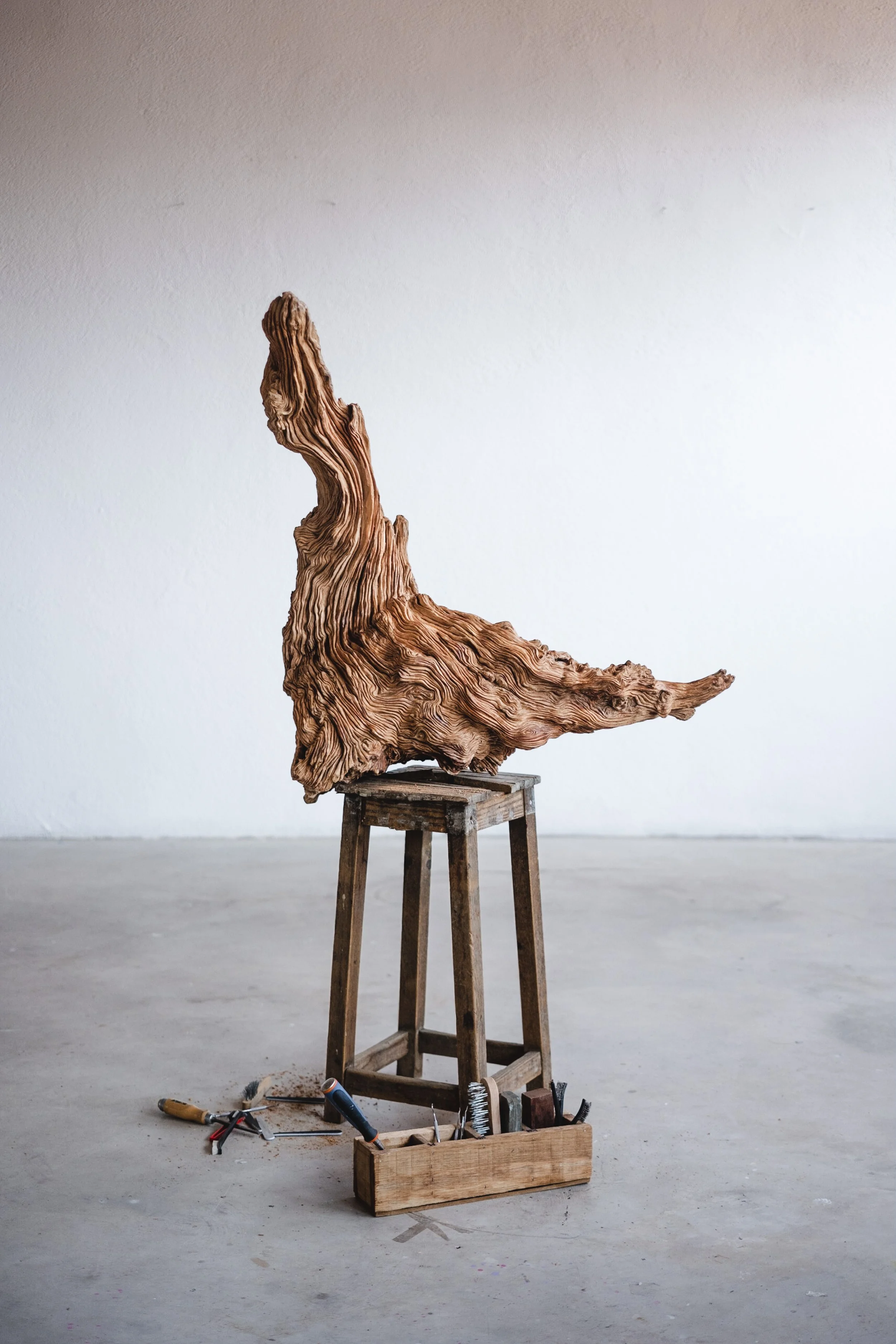
“ I spend years working on forms that a tree took decades to build.”
CHRONOX begins with a simple question: what is it that shapes us, and what allows that shape to endure?
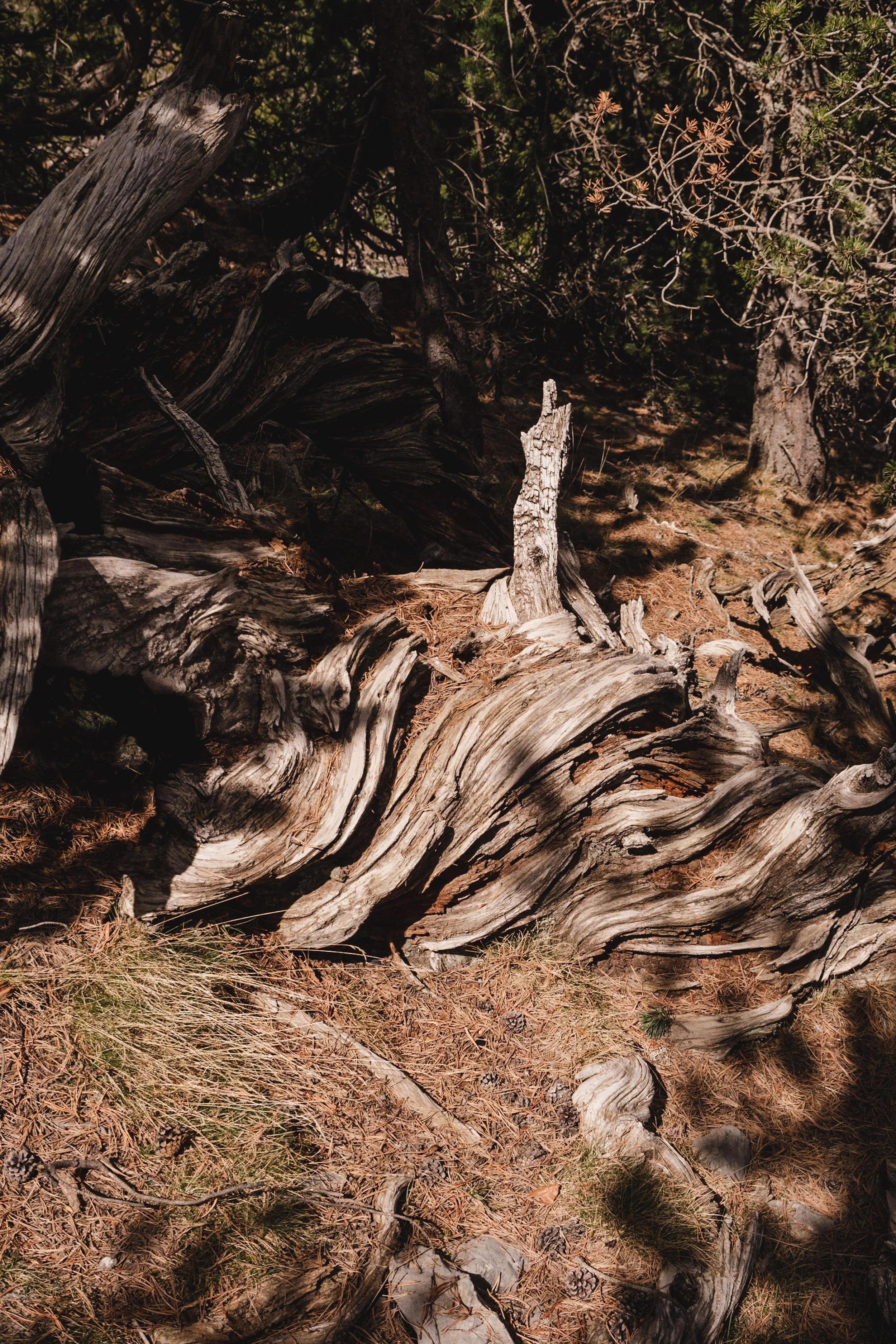
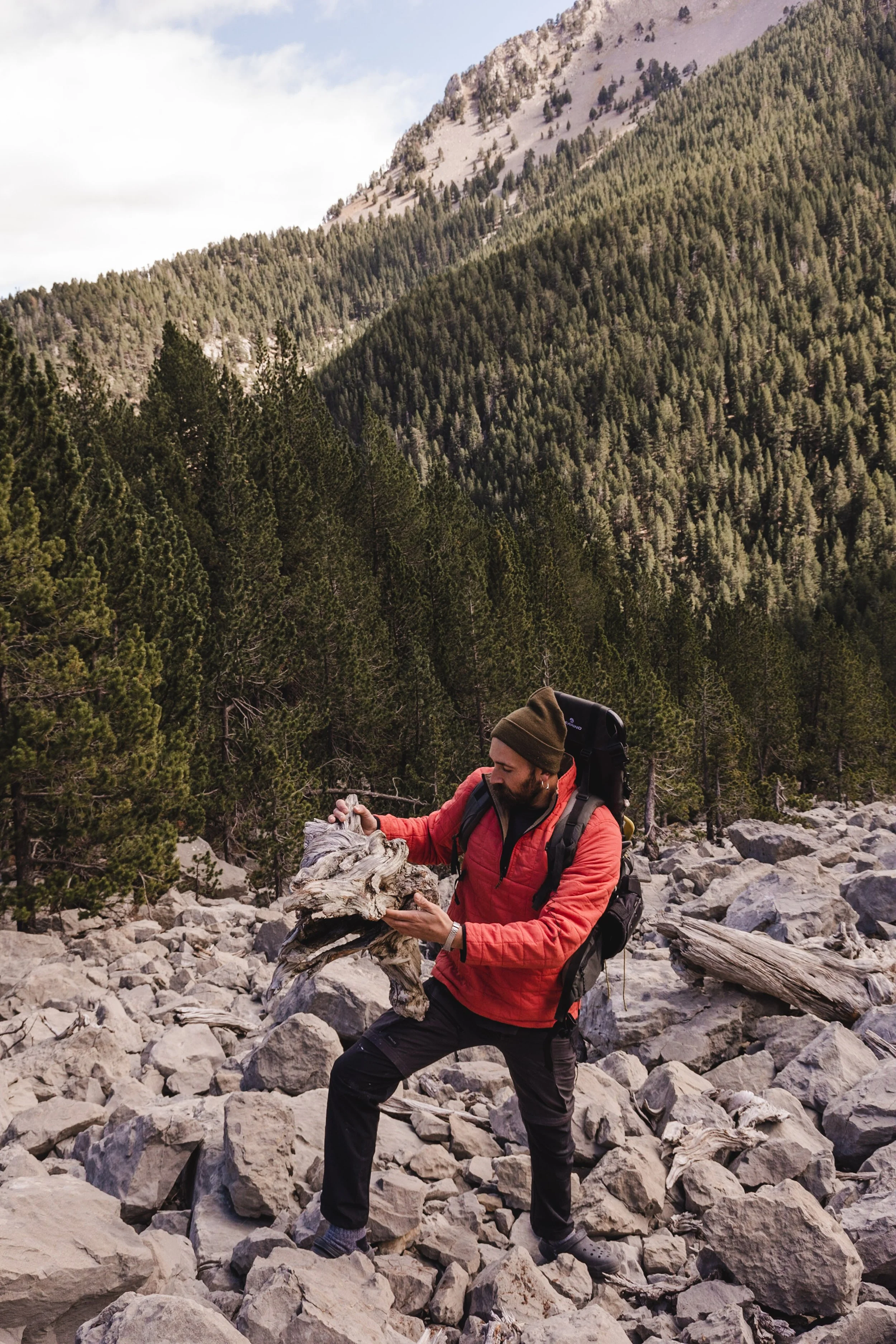
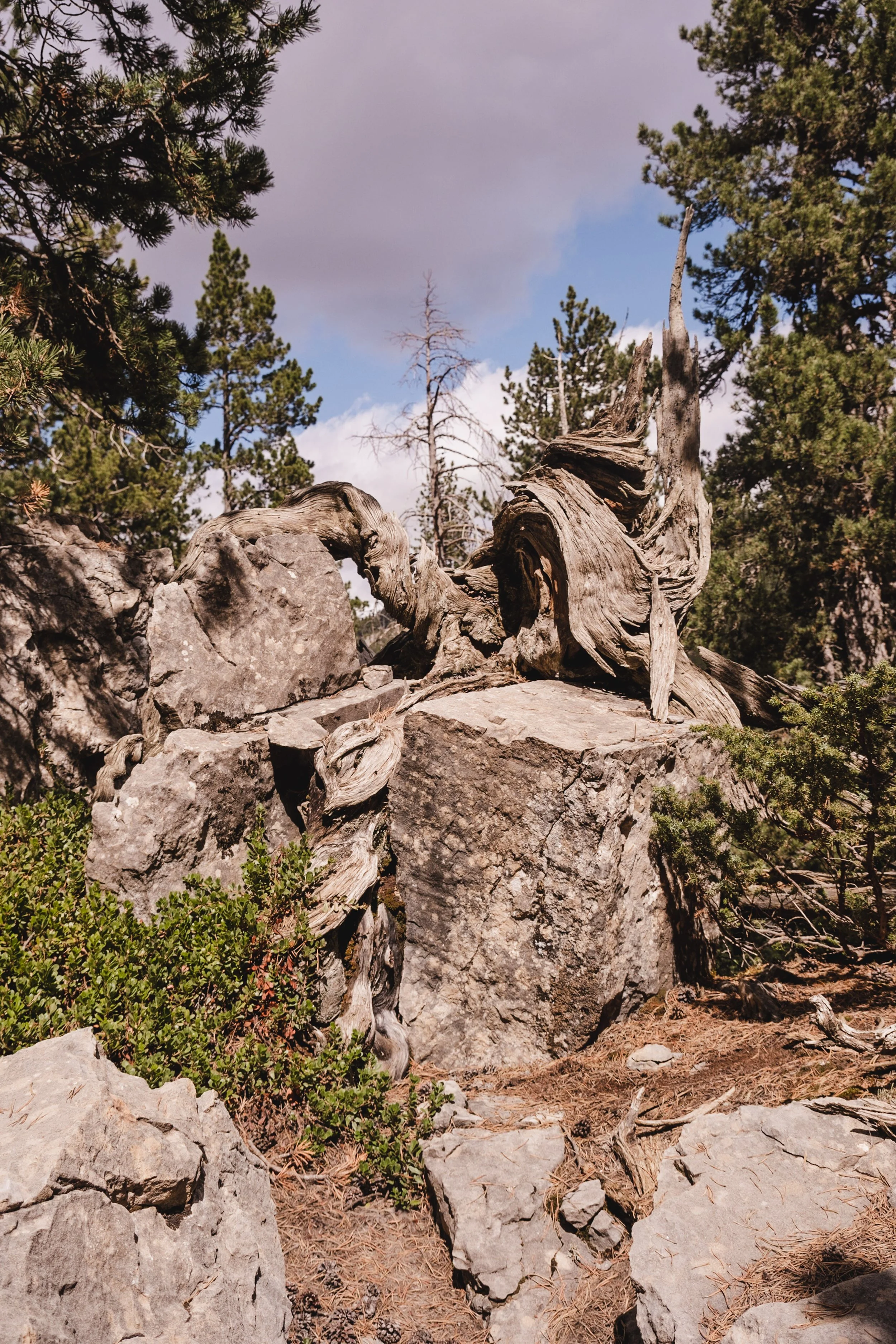
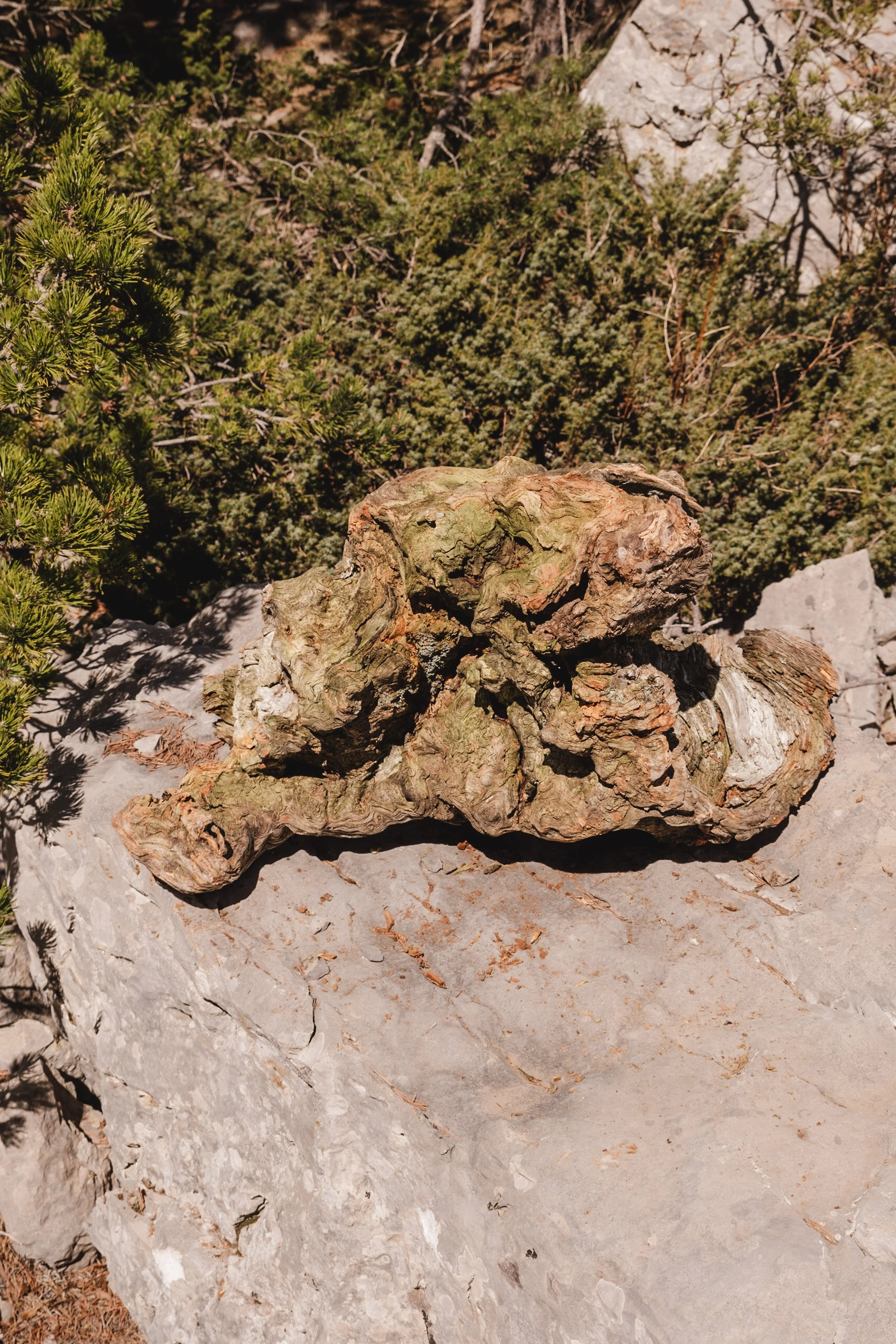
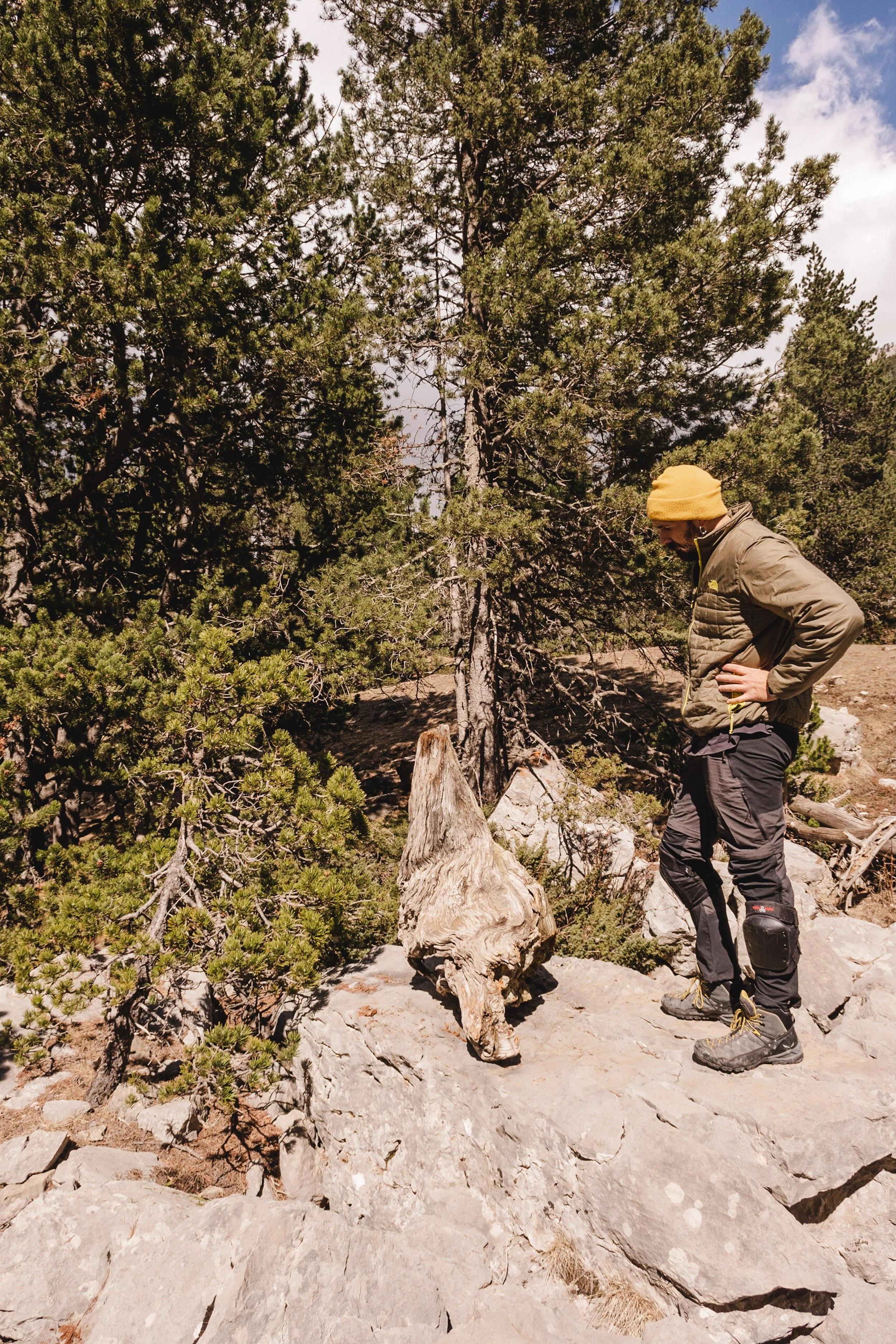
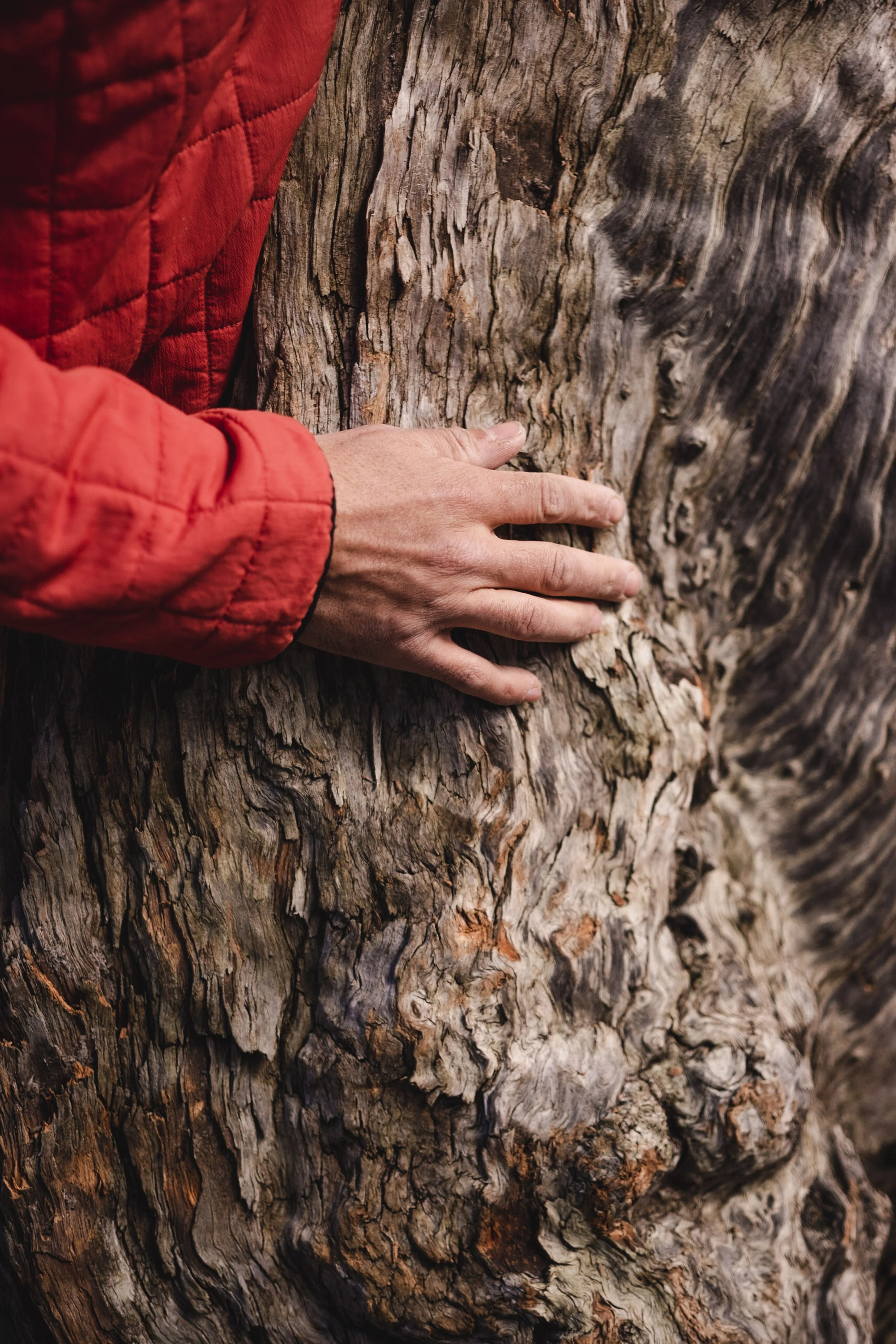
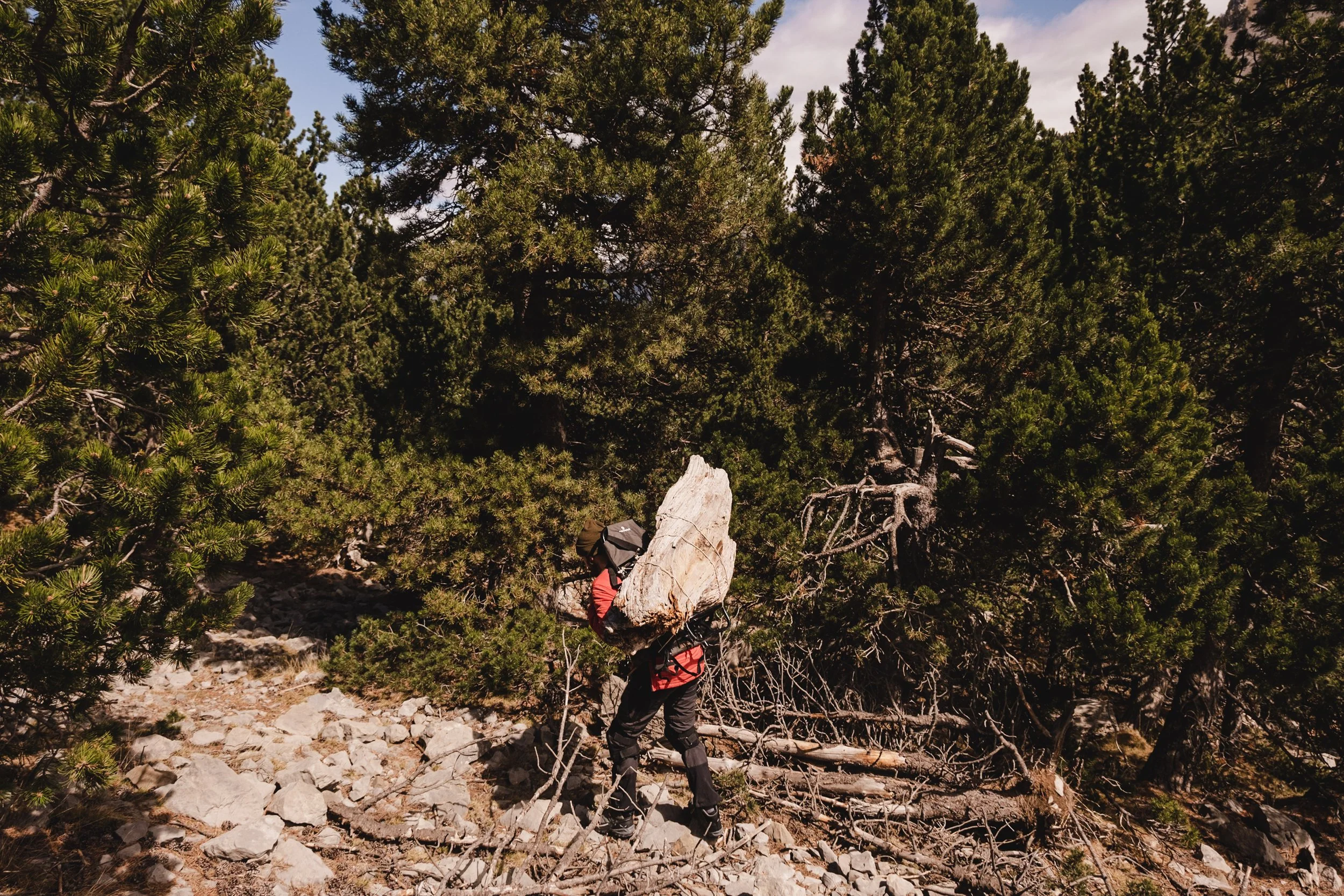
The fragments of wood I recover from high-mountain environments are not materials awaiting a future purpose. They are structures formed over decades under specific conditions of growth, adaptation, and wear.
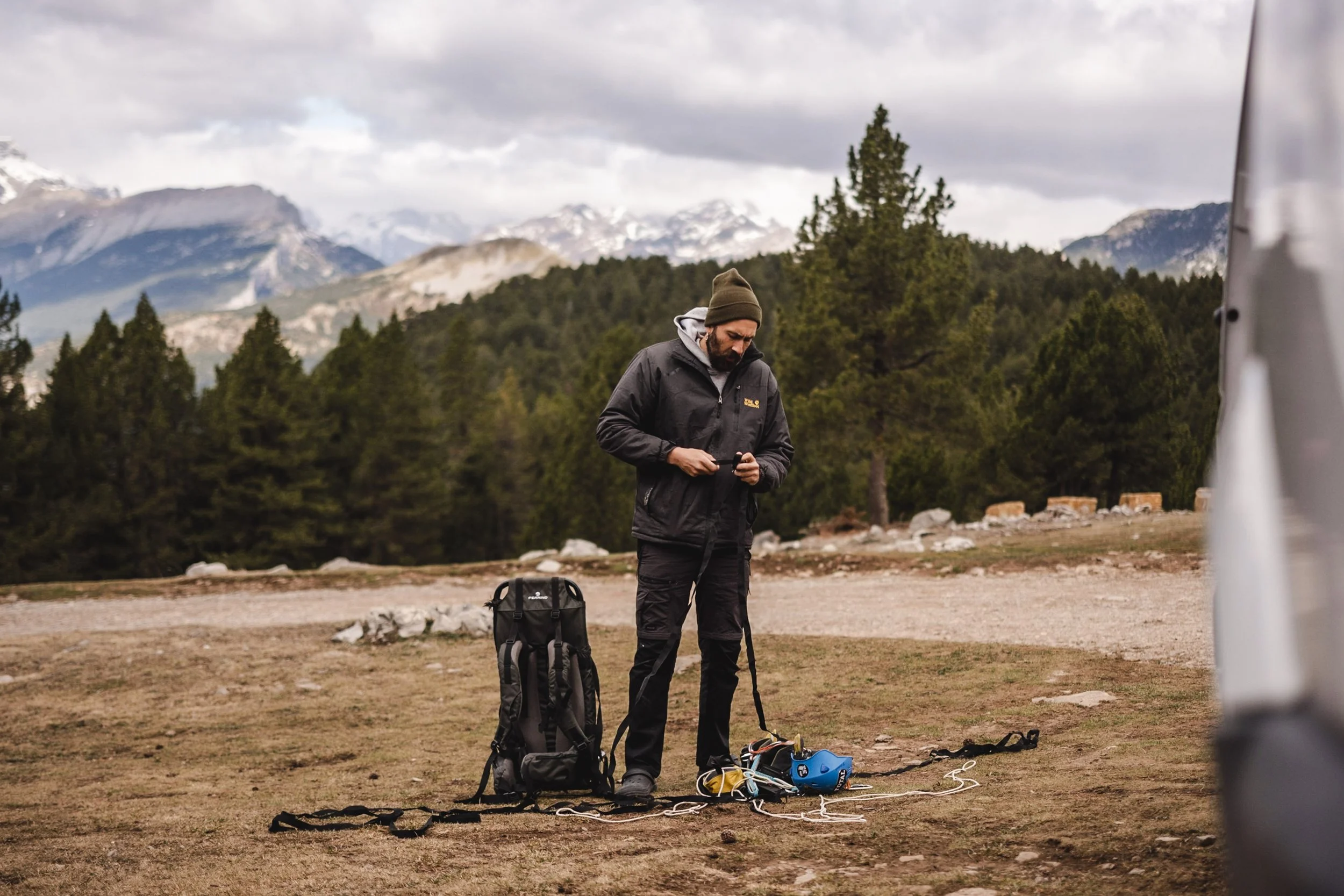
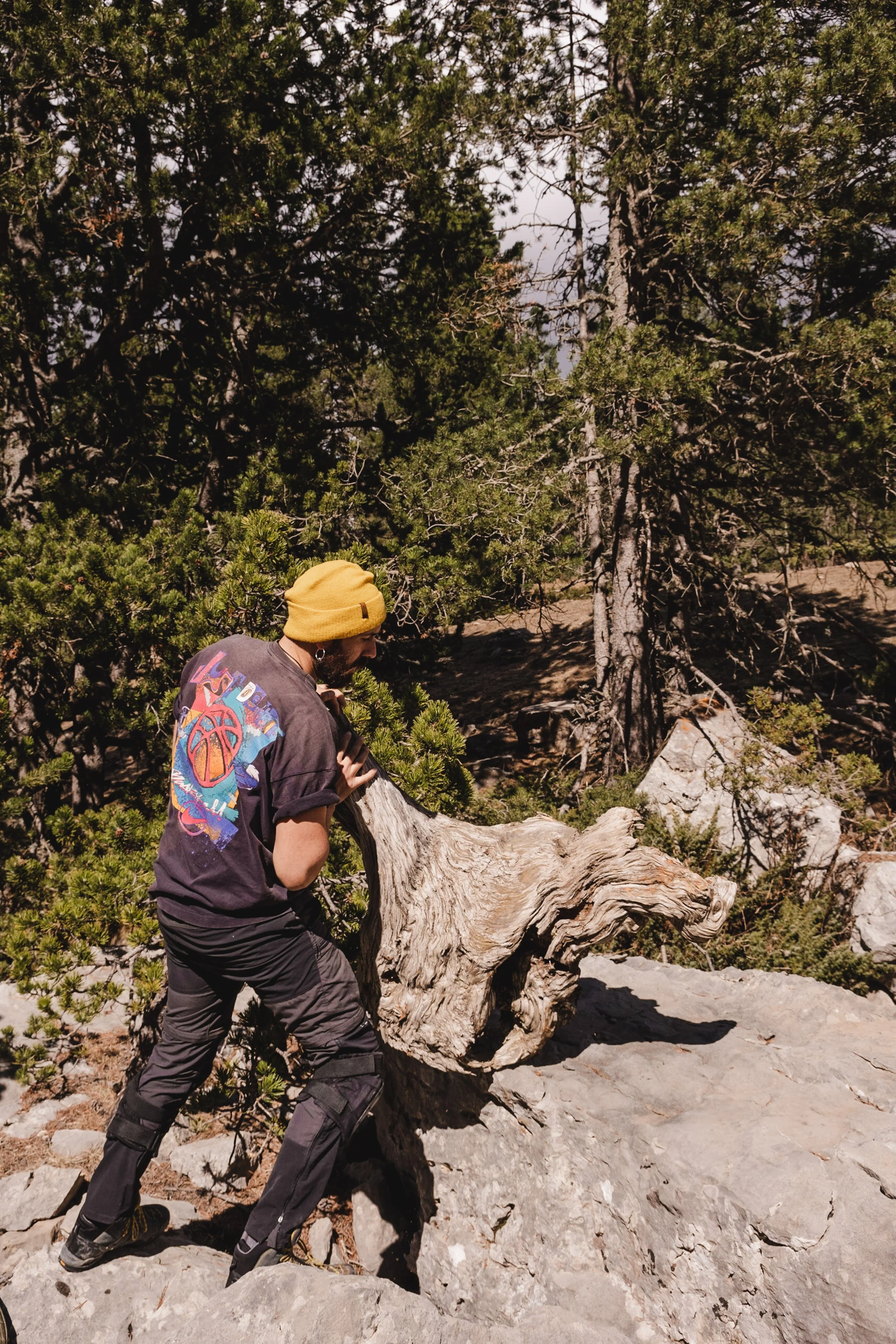
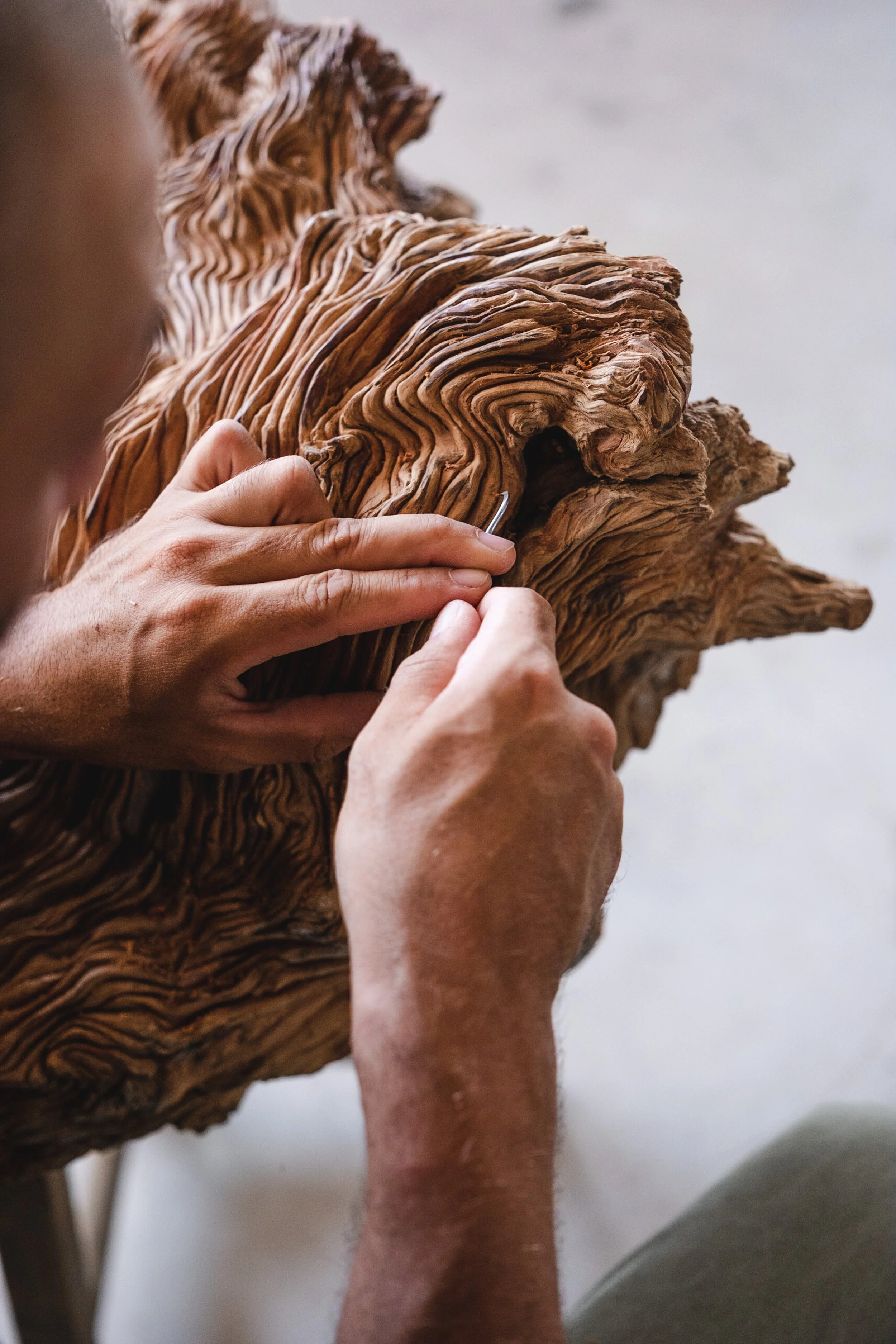
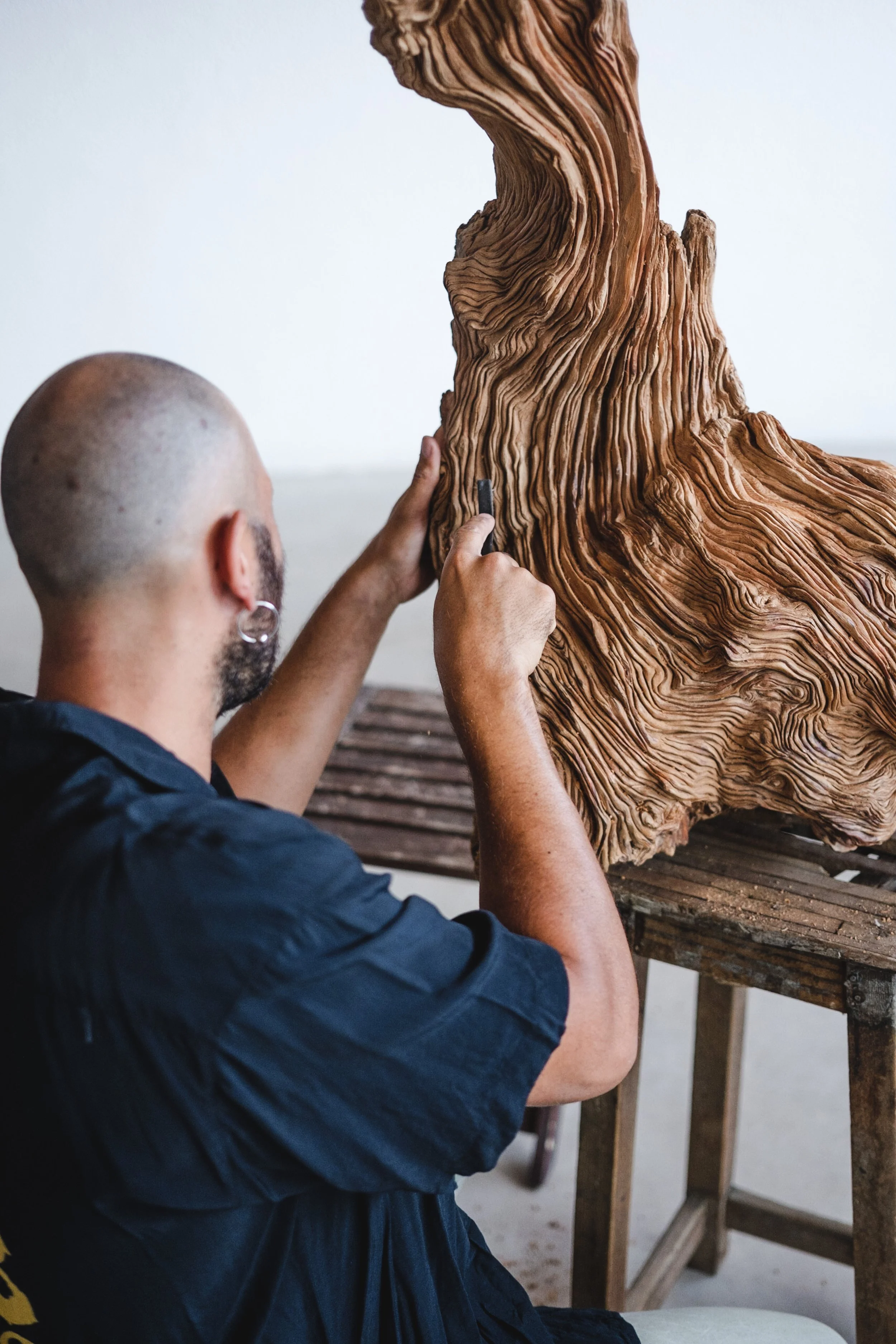
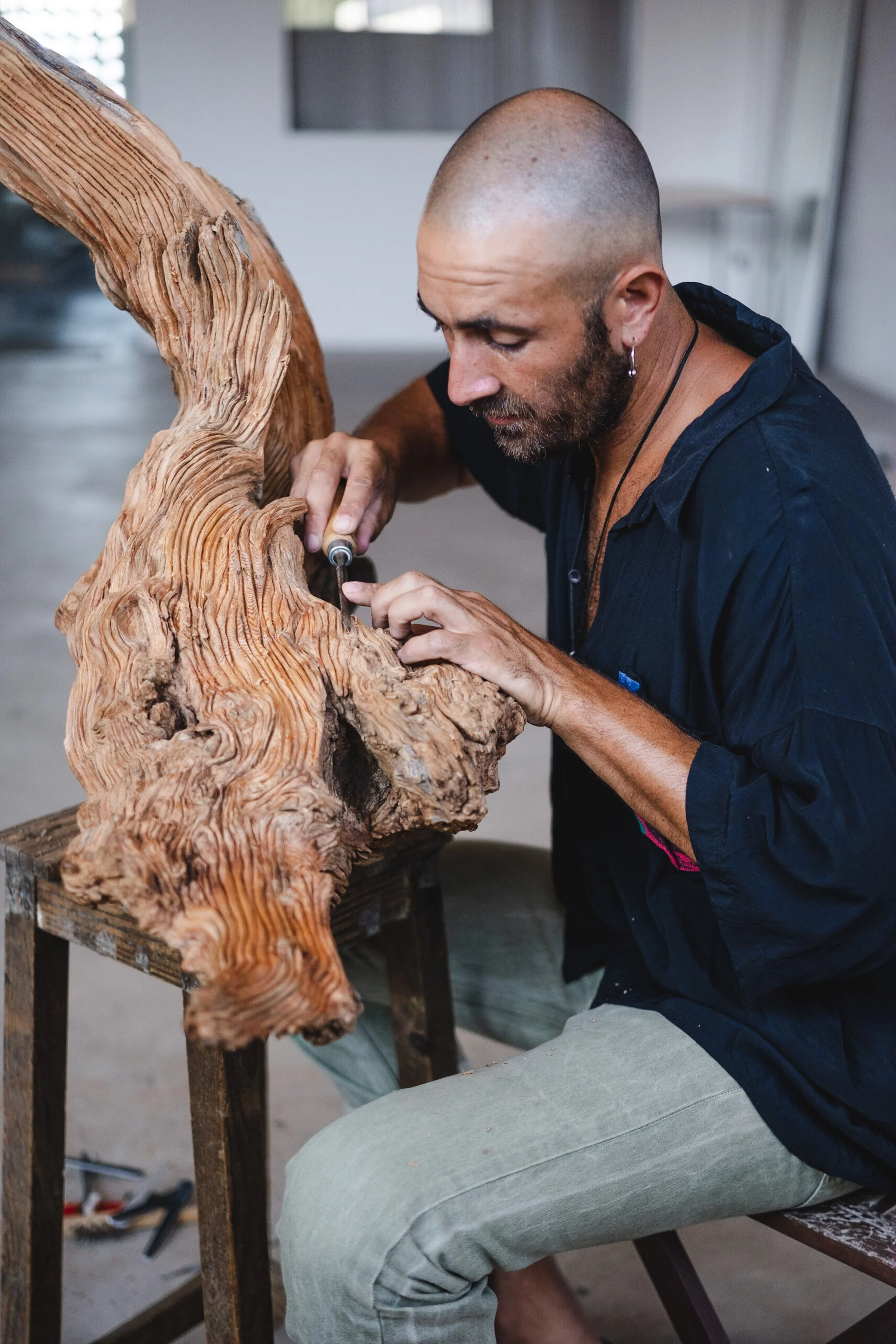
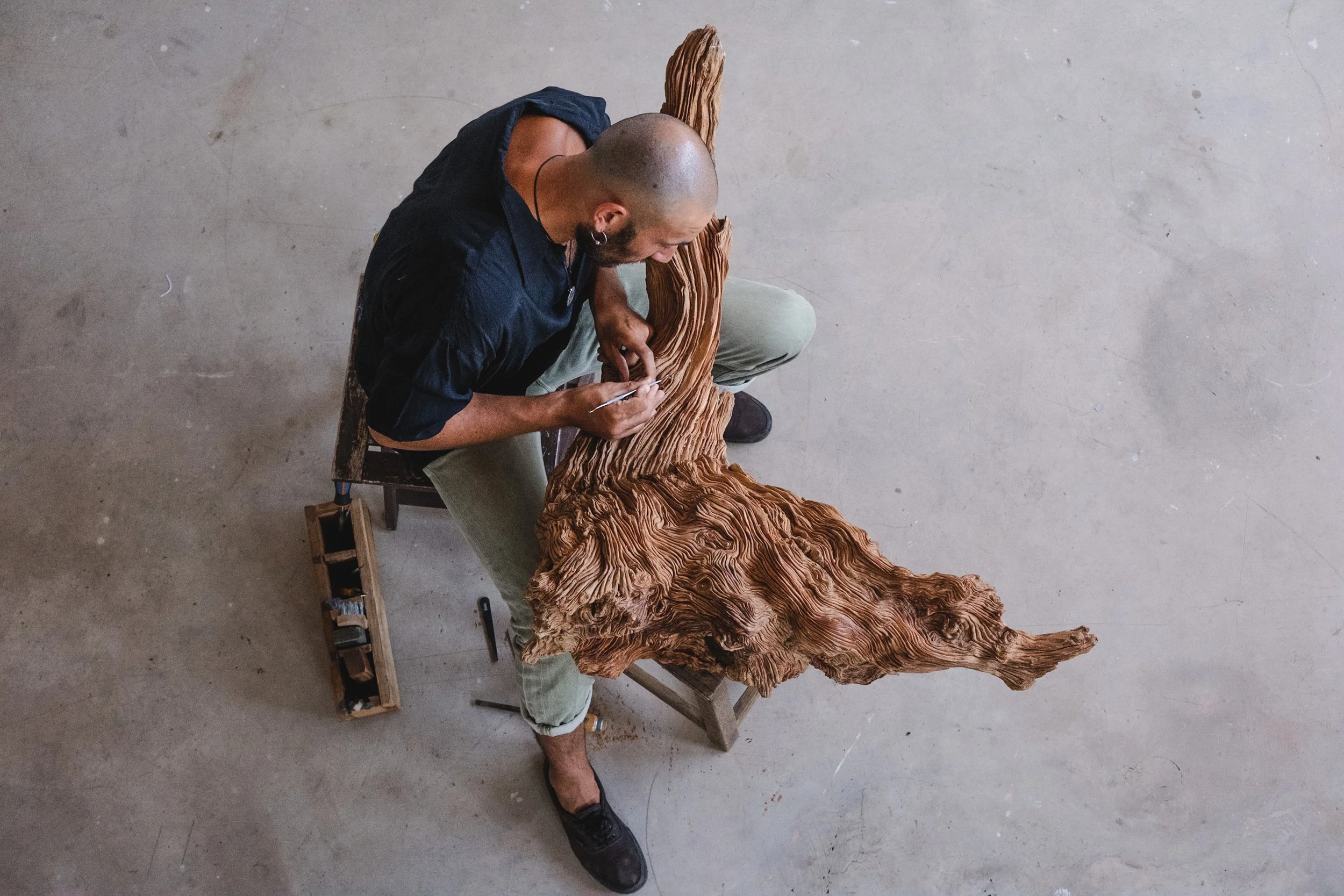
My work consists of recovering them and spending years observing what was already there.
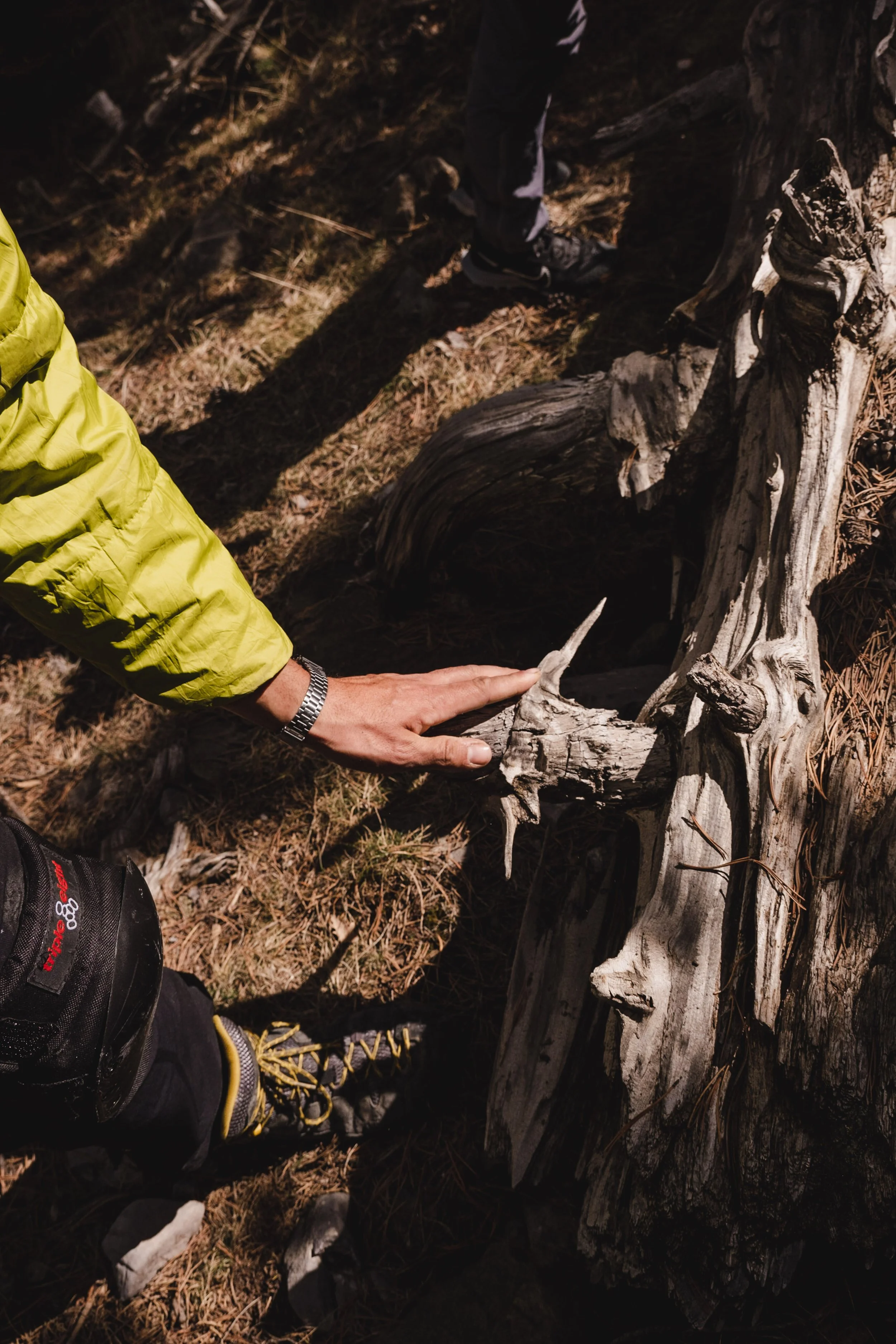
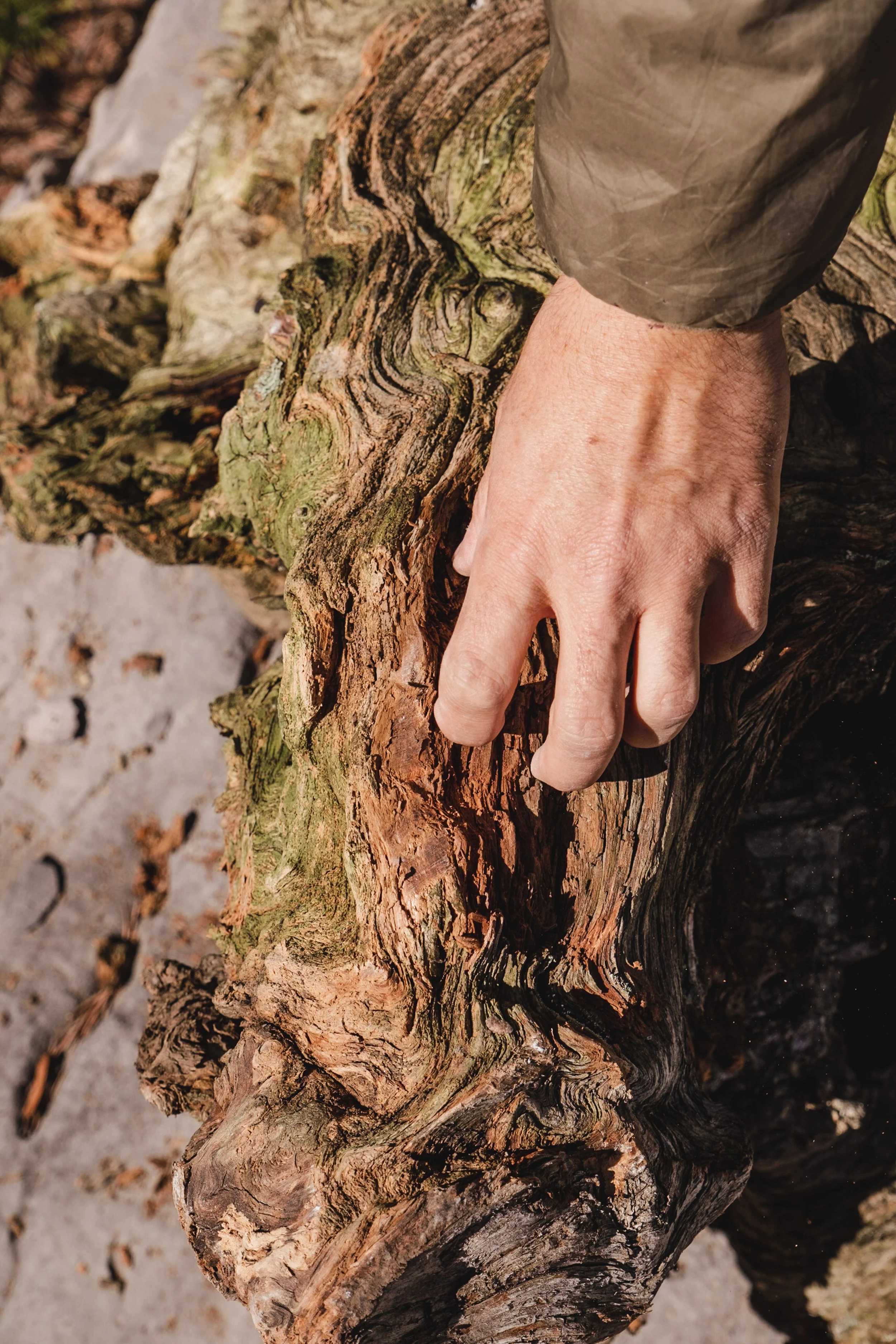
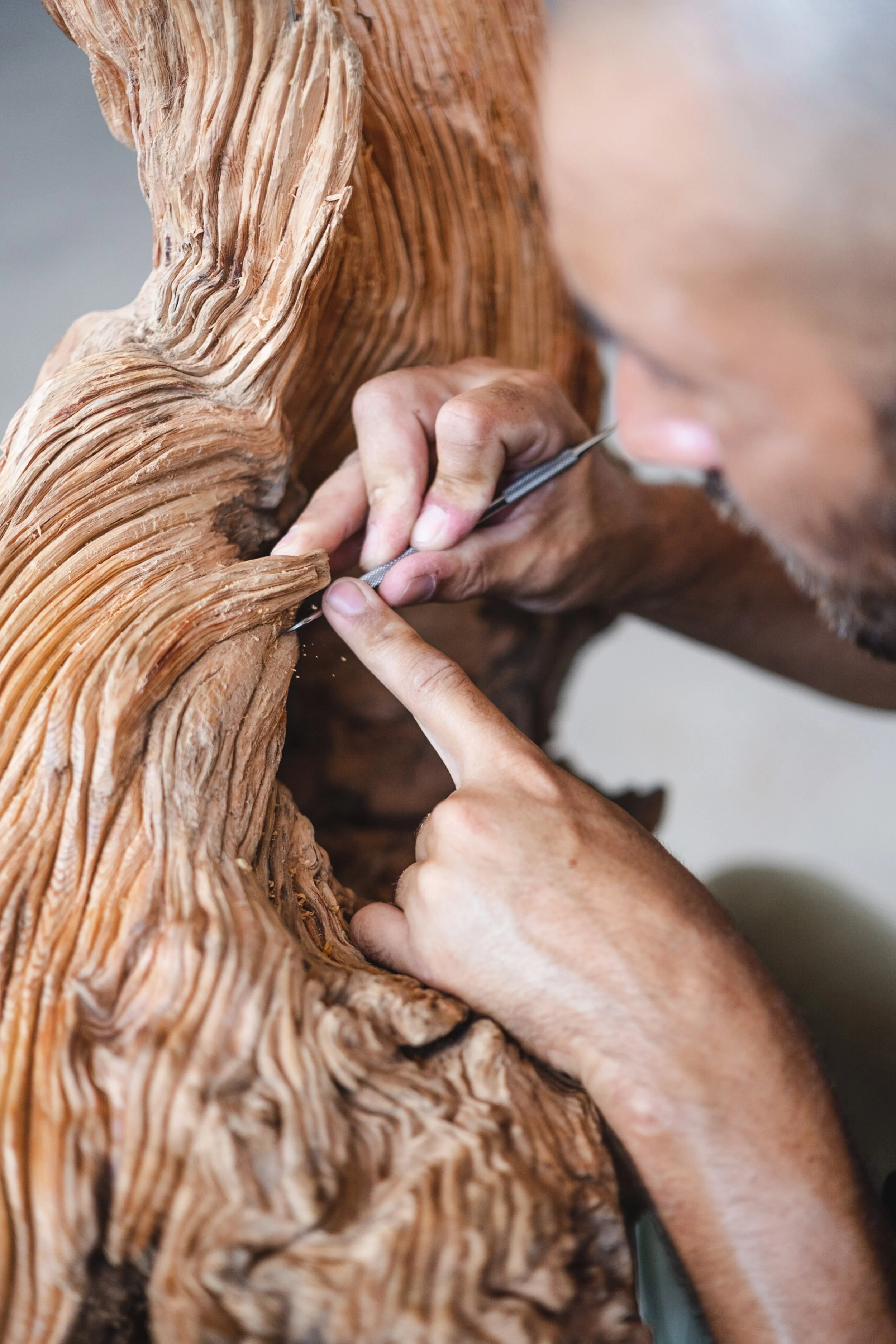
Each intervention is minimal. I do not seek to correct, complete, or transform the material. Instead, I work with it to reveal relationships, tensions, and traces that remained hidden within its interior.
Over time, I came to understand that CHRONOX is not solely about trees.
It is about the distance between natural processes and the speed at which we tend to engage with the world.
A tree may require more than a century to develop an architecture that we observe for only a few seconds. Yet much of its history remains inscribed within the material long after its fall.
This project begins from that observation in order to raise a broader question: what value do we assign to something whose formation requires more time than we are capable of perceiving?
Each piece results from the convergence of biological growth, environmental transformation, and human action. None of these elements alone can fully explain it.
For this reason, CHRONOX has no predefined final destination. It is an ongoing investigation into time, matter, and human intervention; into the traces they leave when they remain in relationship long enough.