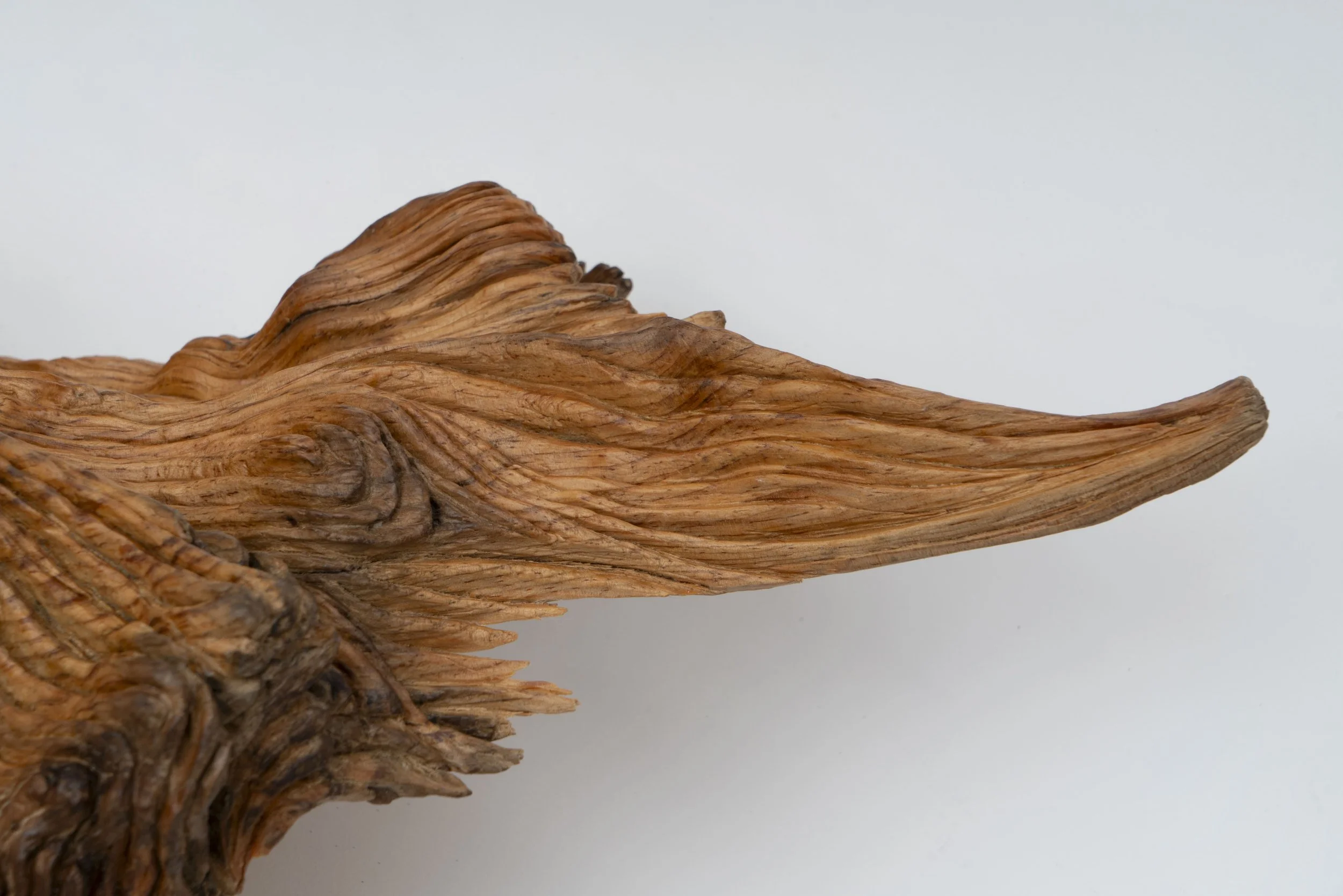
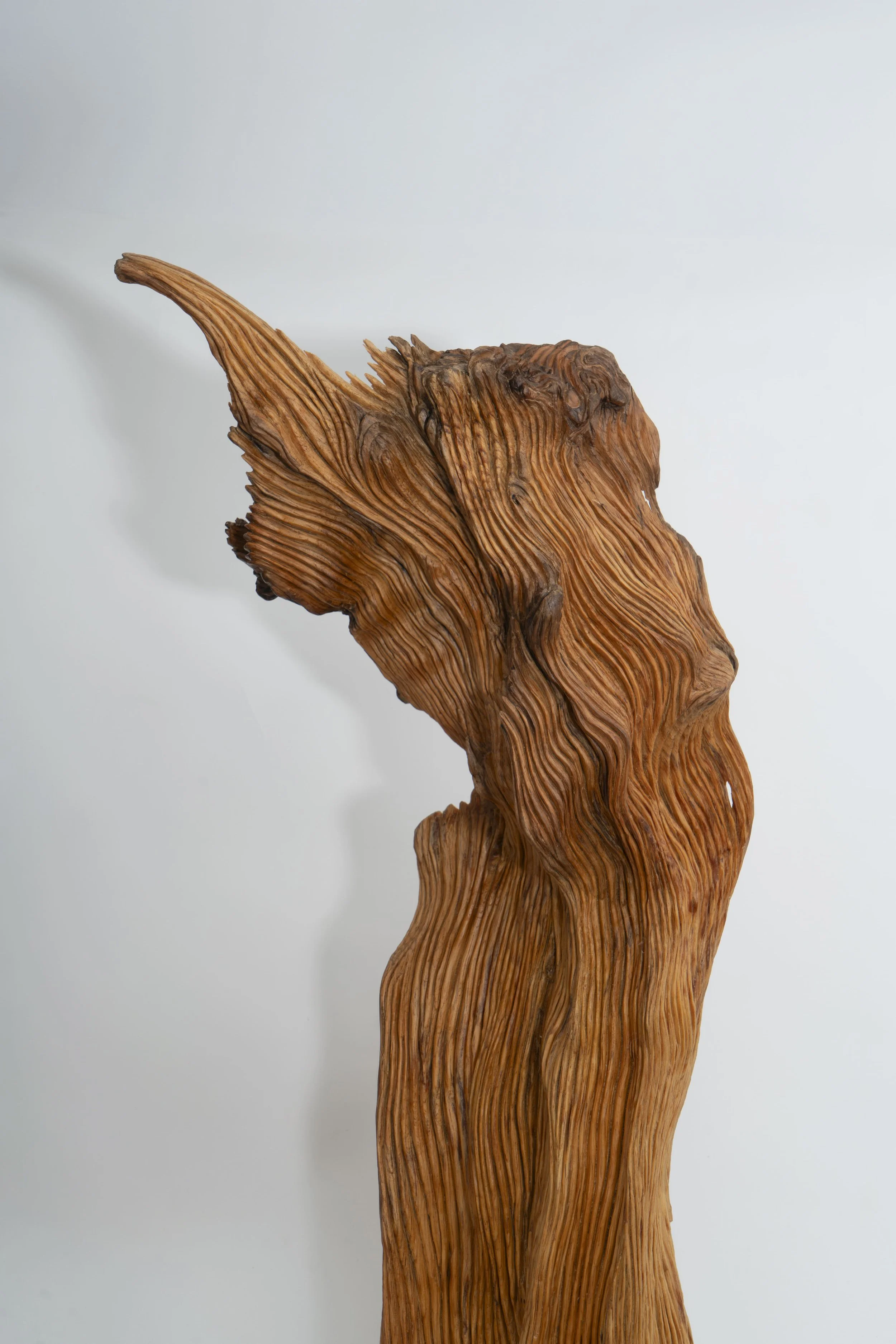
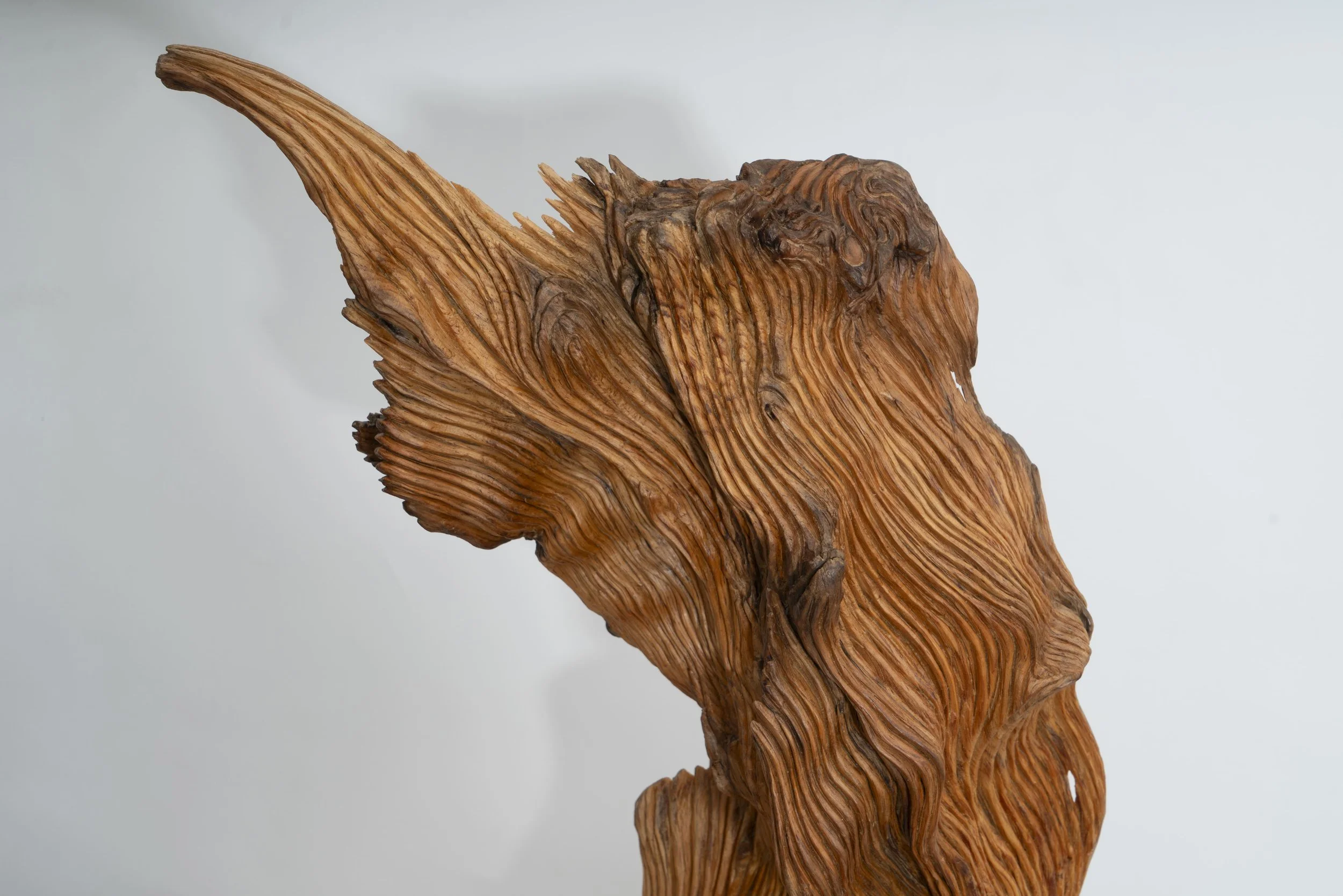
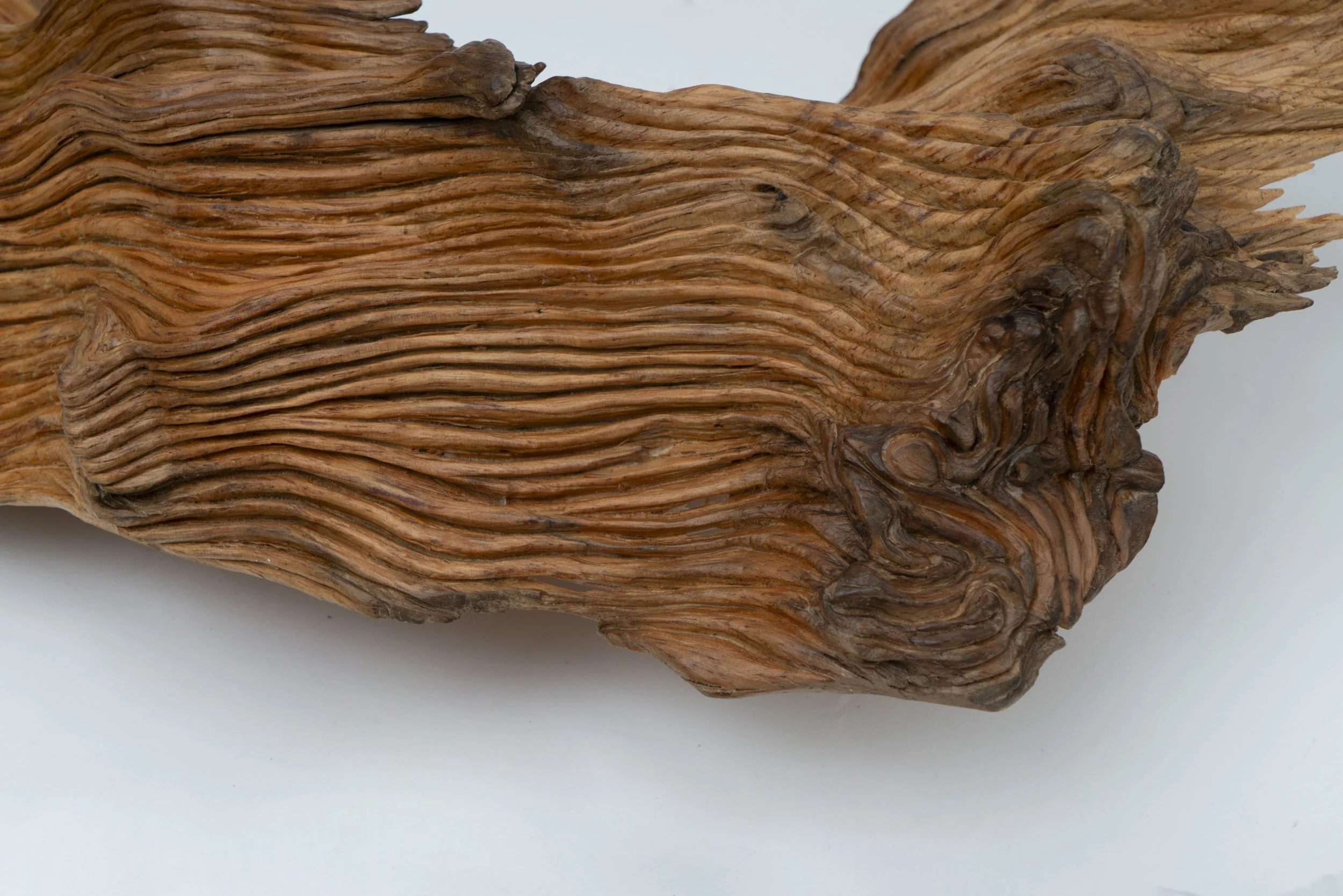
“C required four years of work. Its form had begun to develop decades earlier”.
“C”
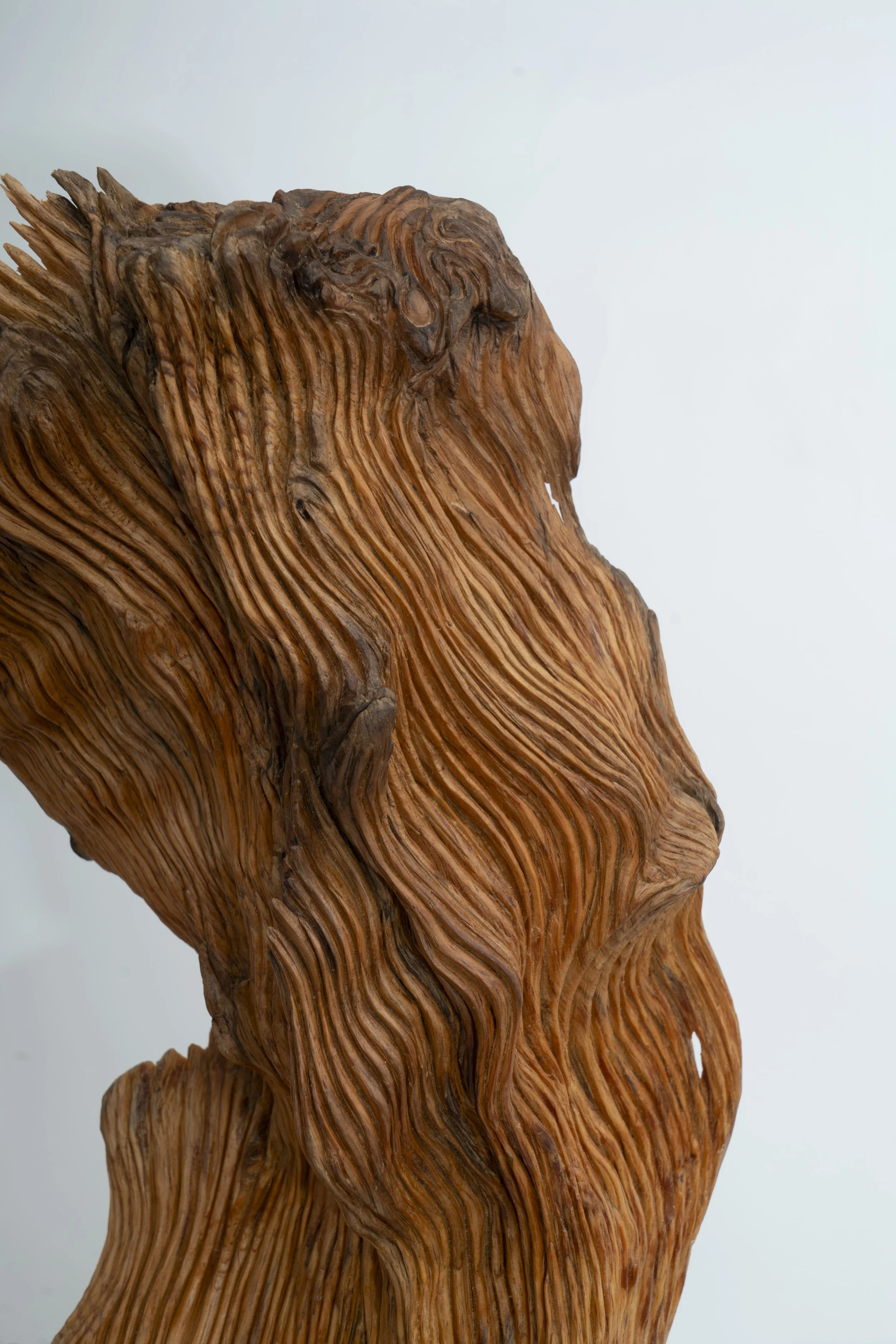
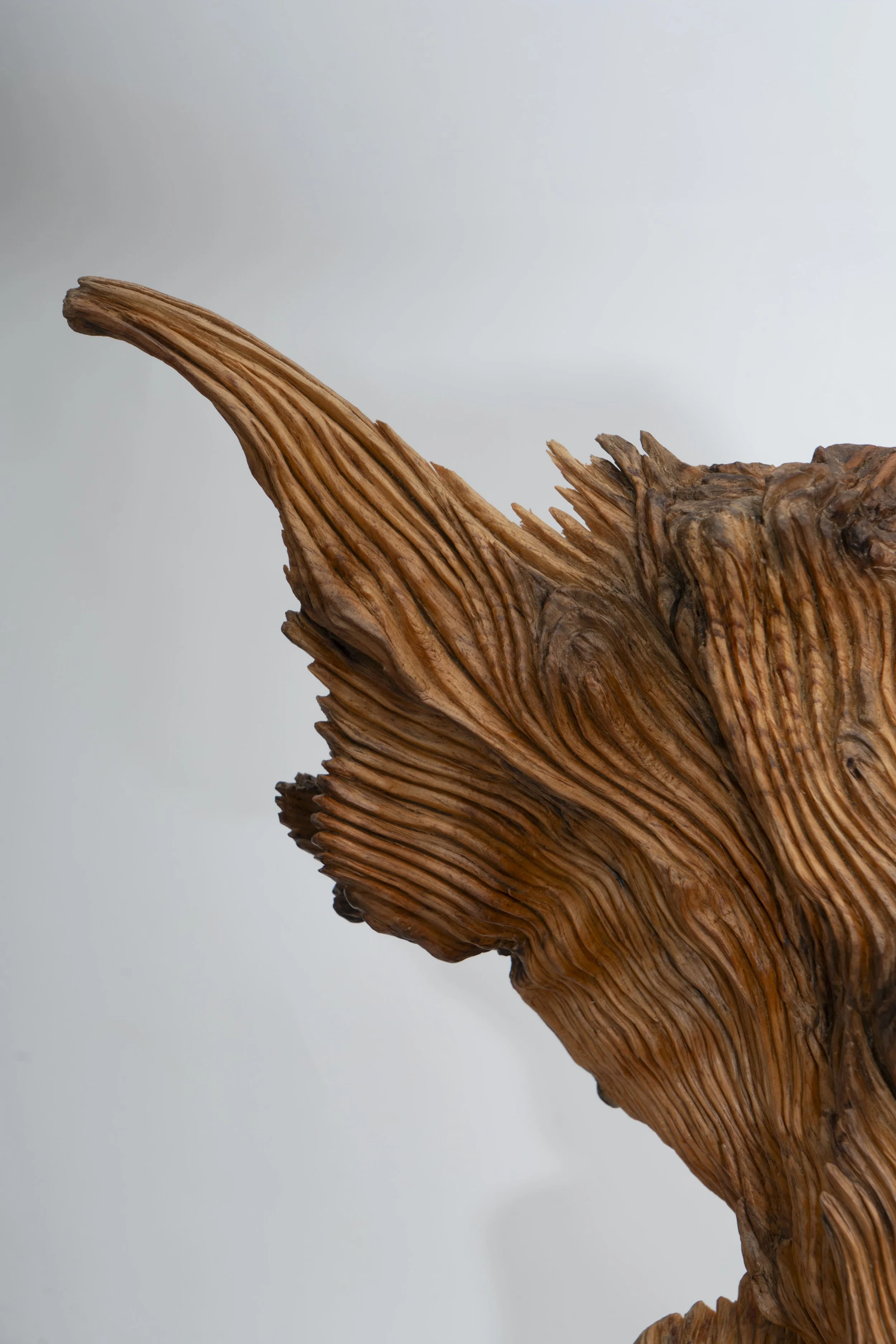
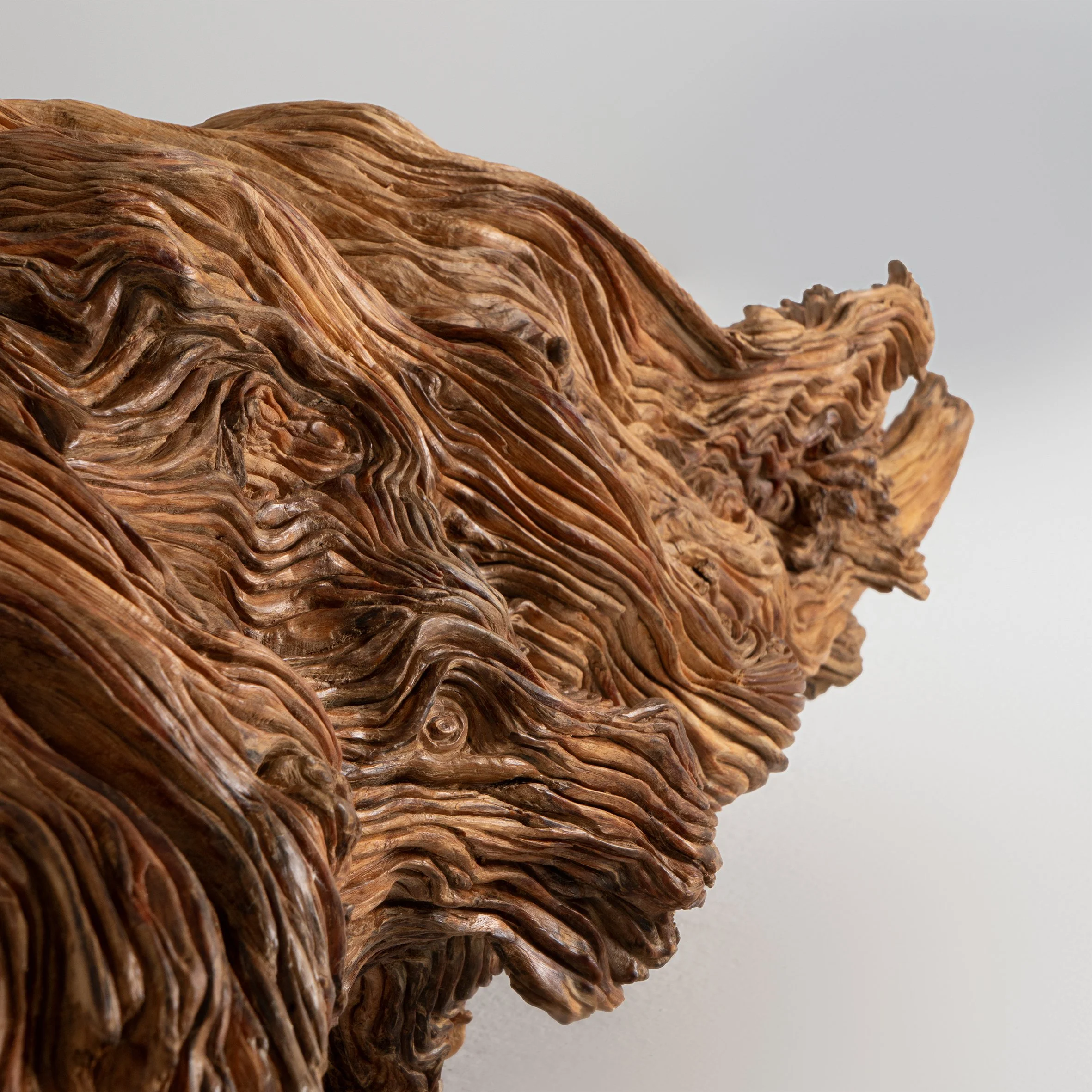
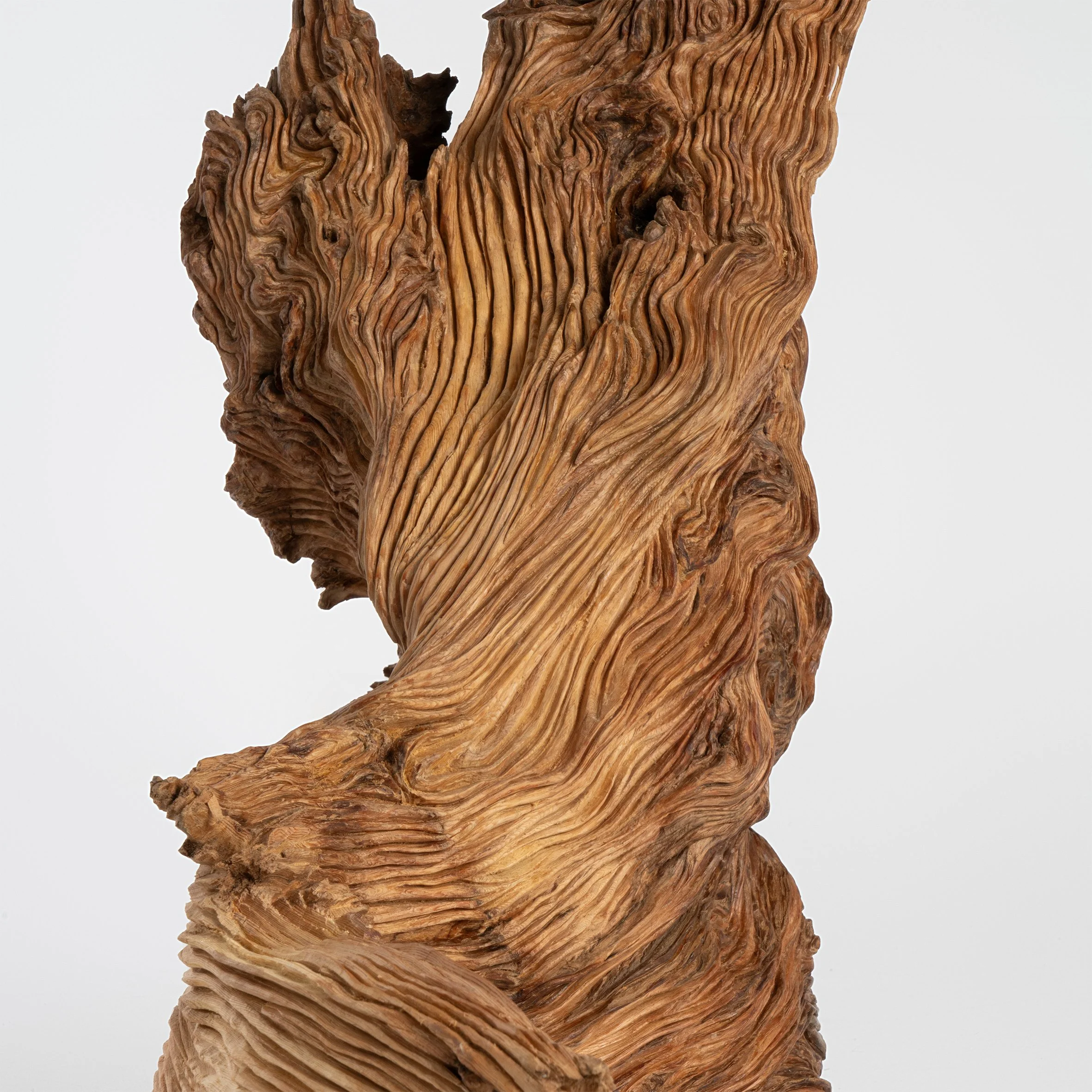
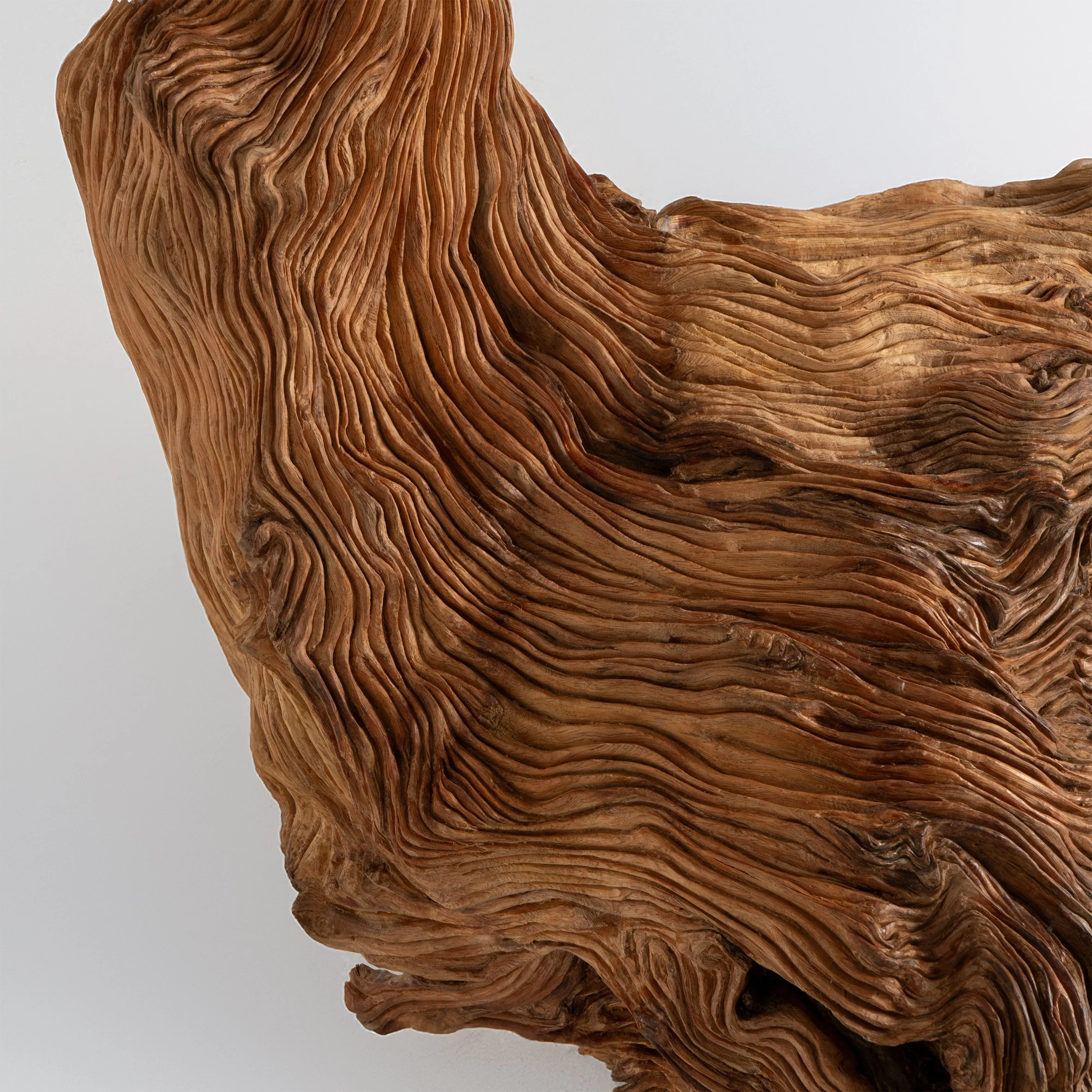
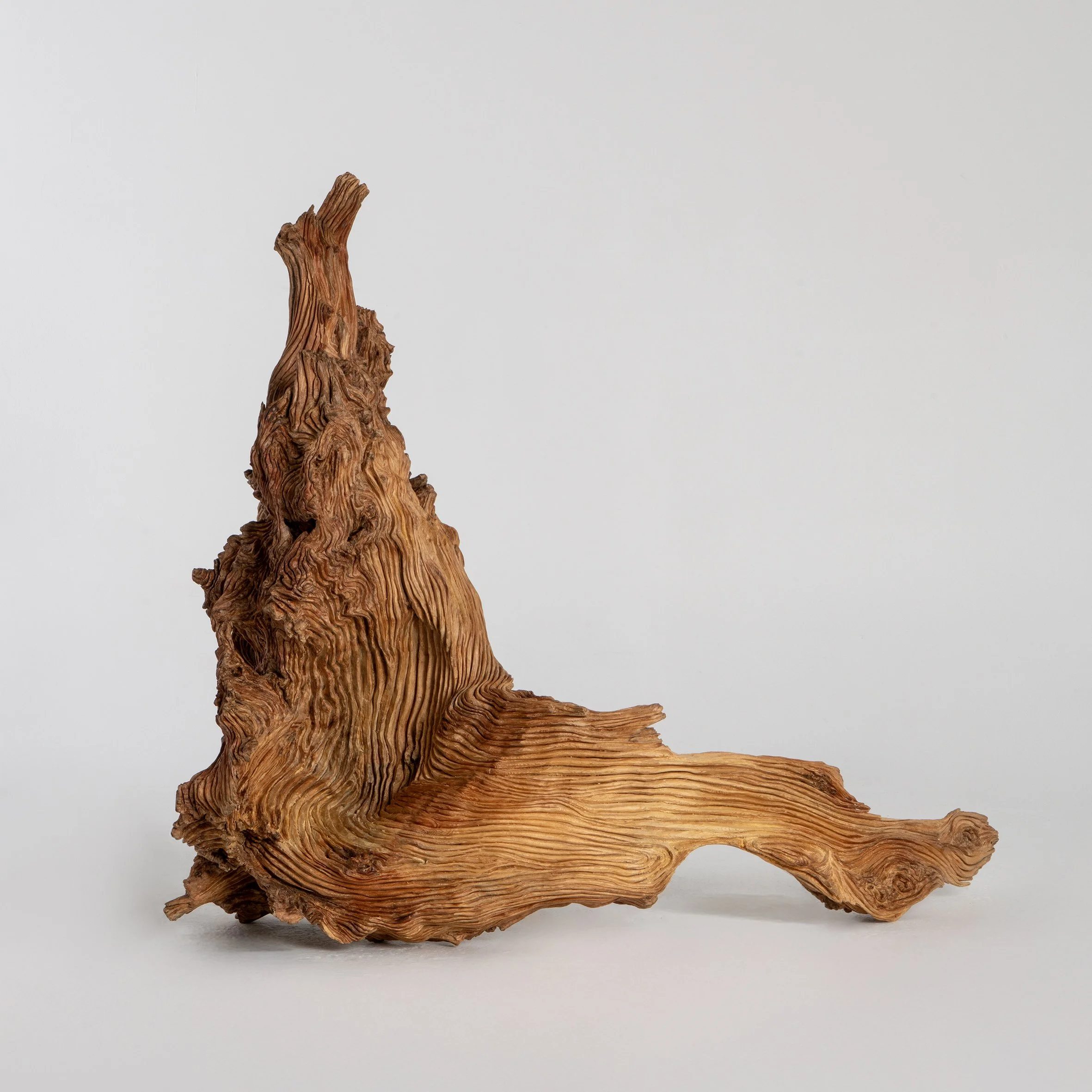
C is the work that marks the beginning of CHRONOX. Its title corresponds to the first letter of the project and opens the sequence of seven sculptures that will spell out its name.
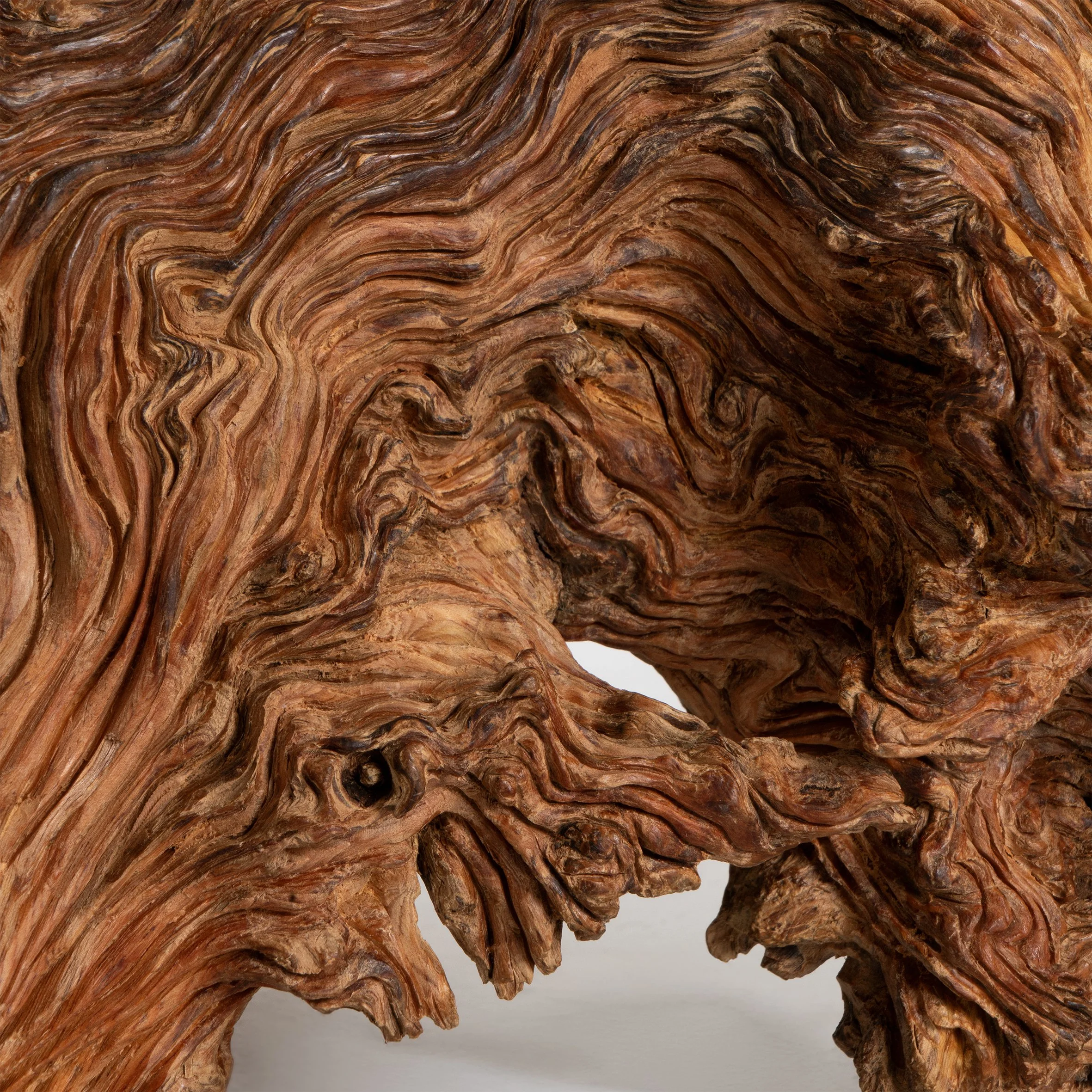
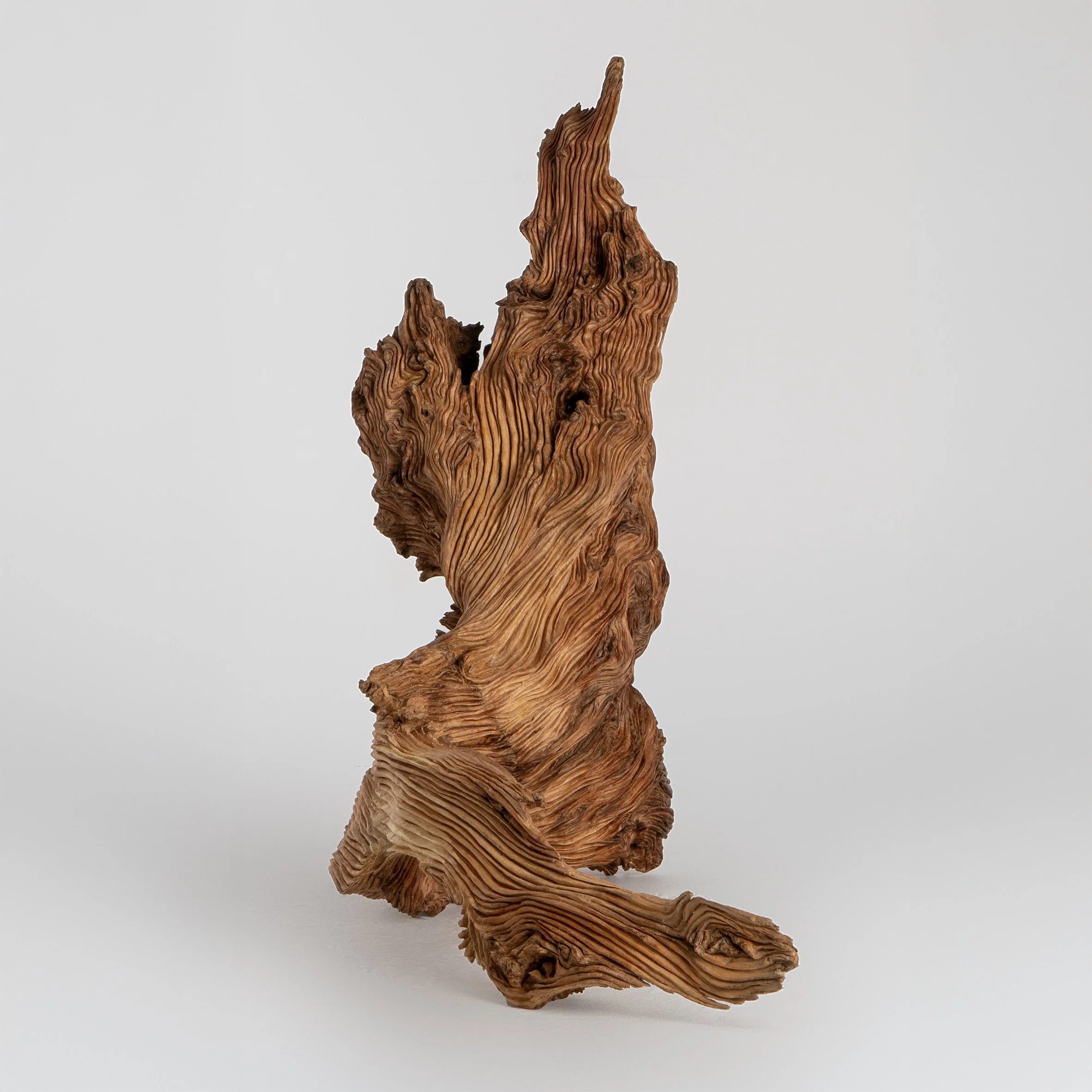
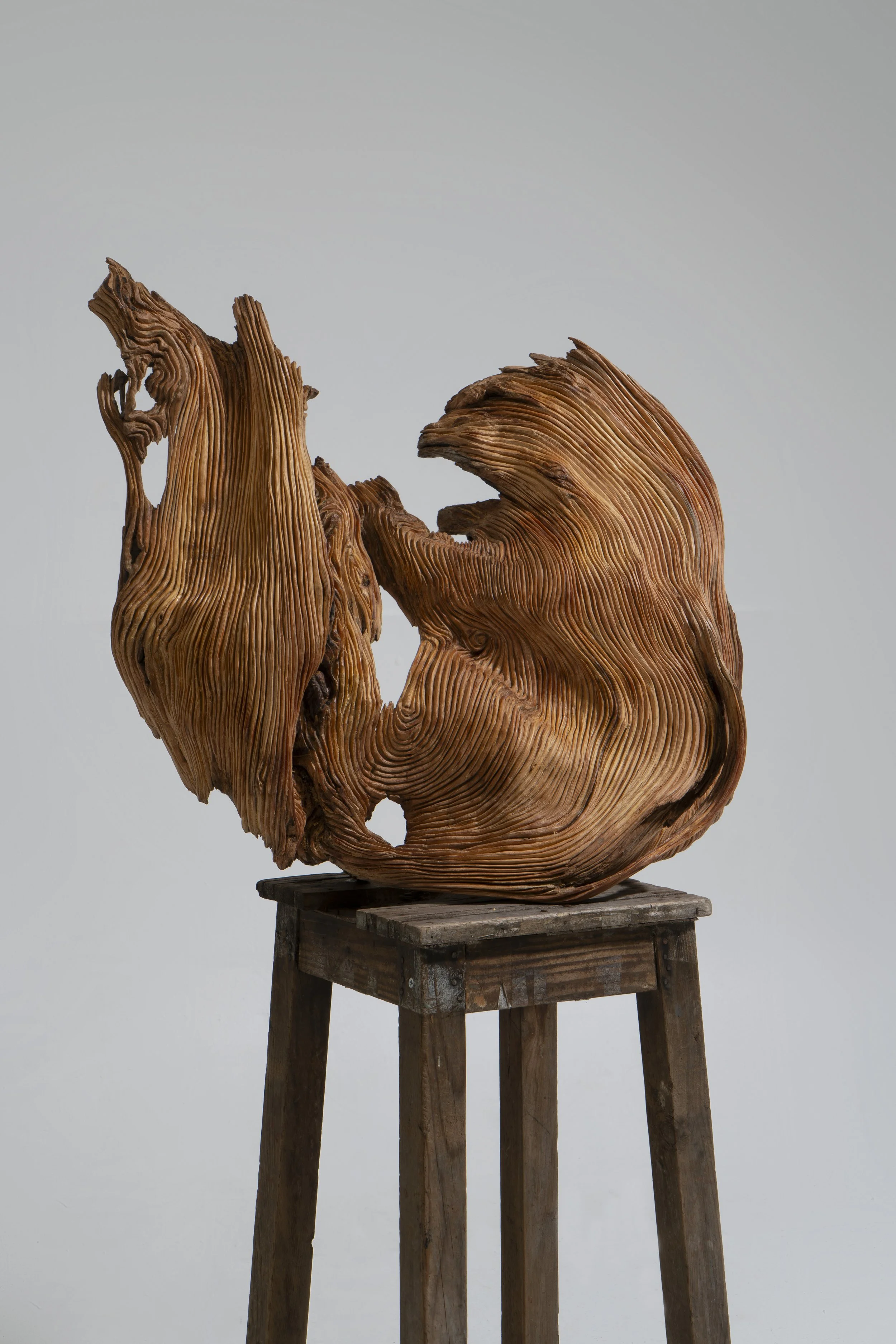
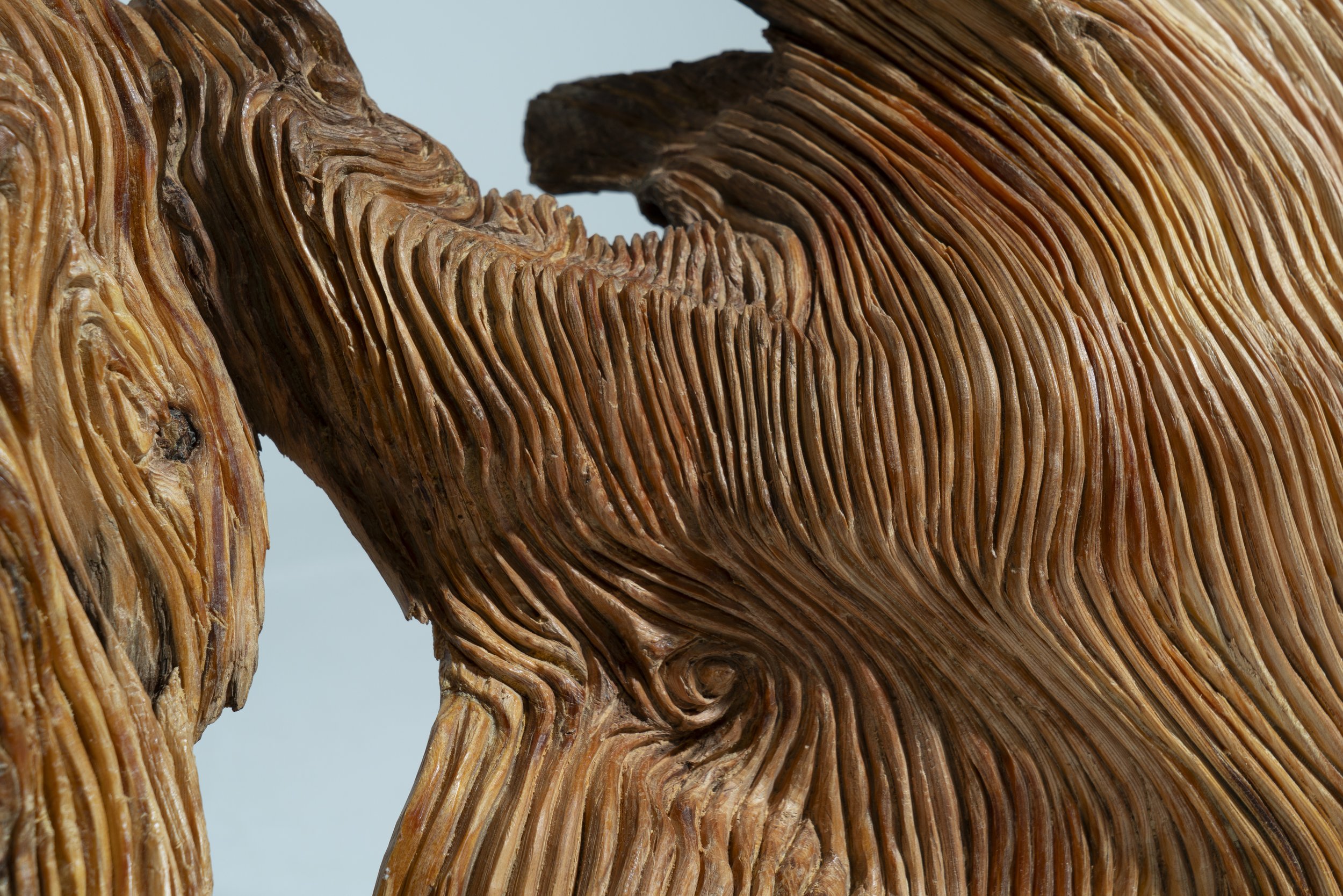
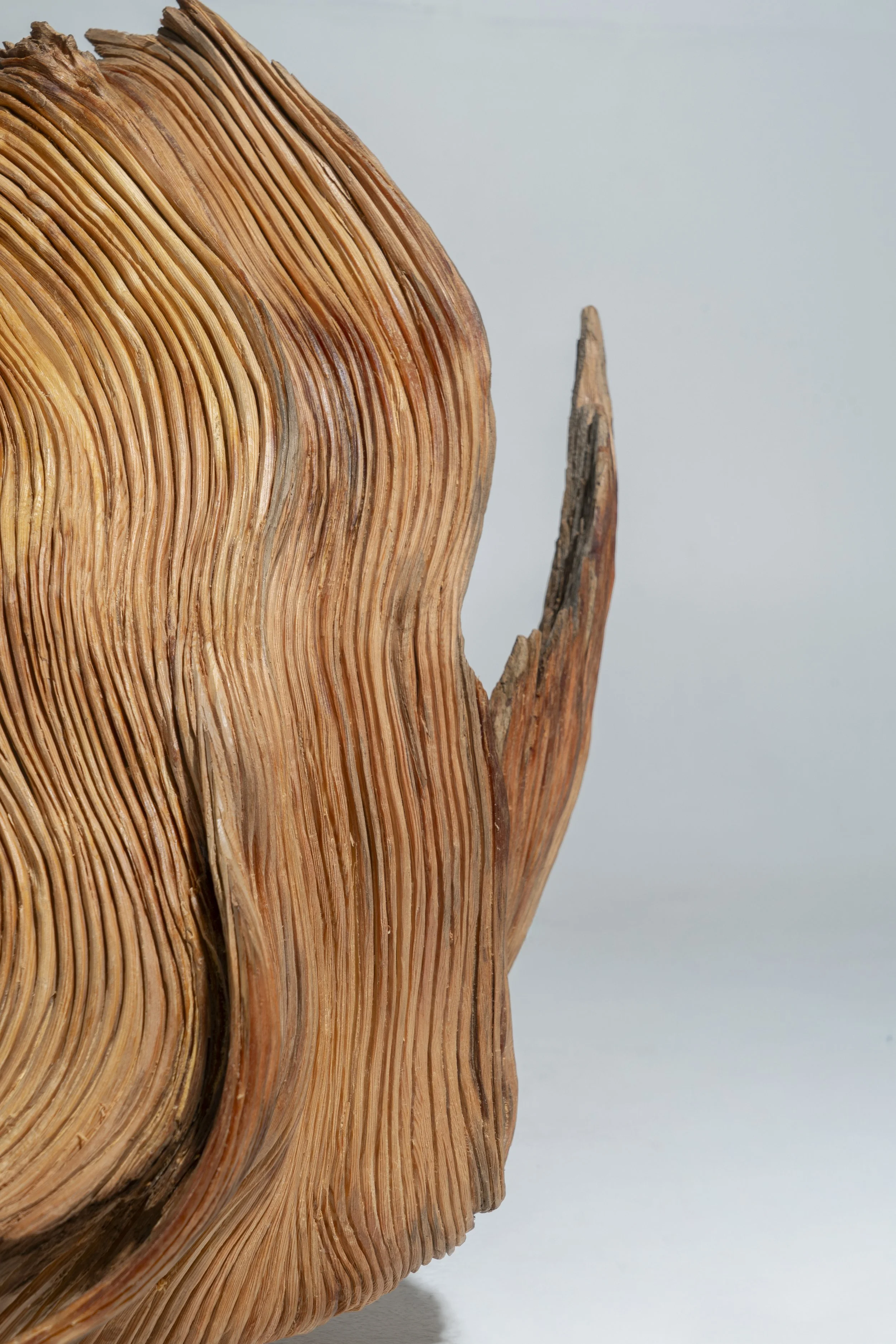
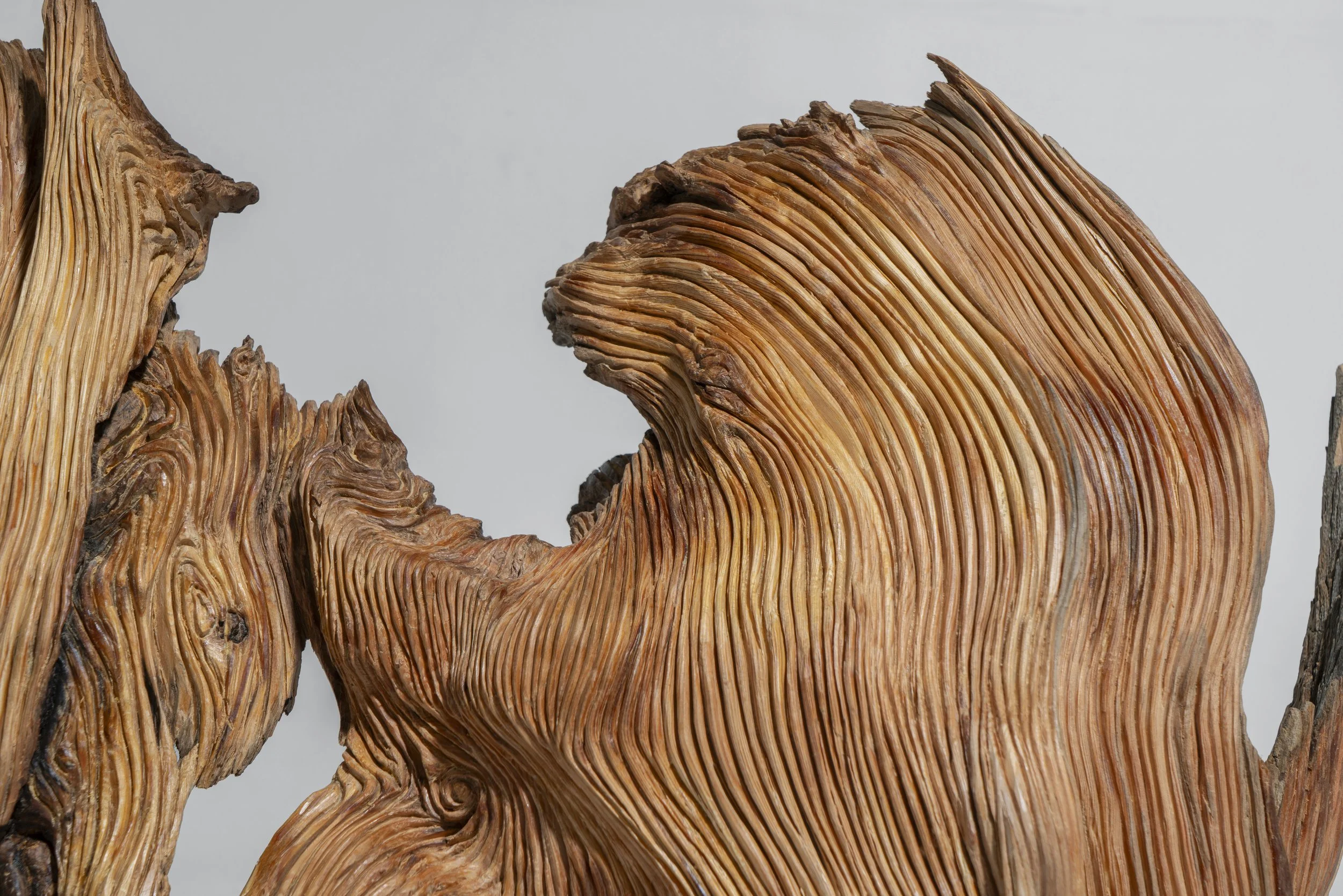
Its development required four years of observation, research and manual intervention on a fragment of black pine rescued from a high-mountain environment. The work preserves the architecture produced by the tree’s growth and its prolonged exposure to the elements.
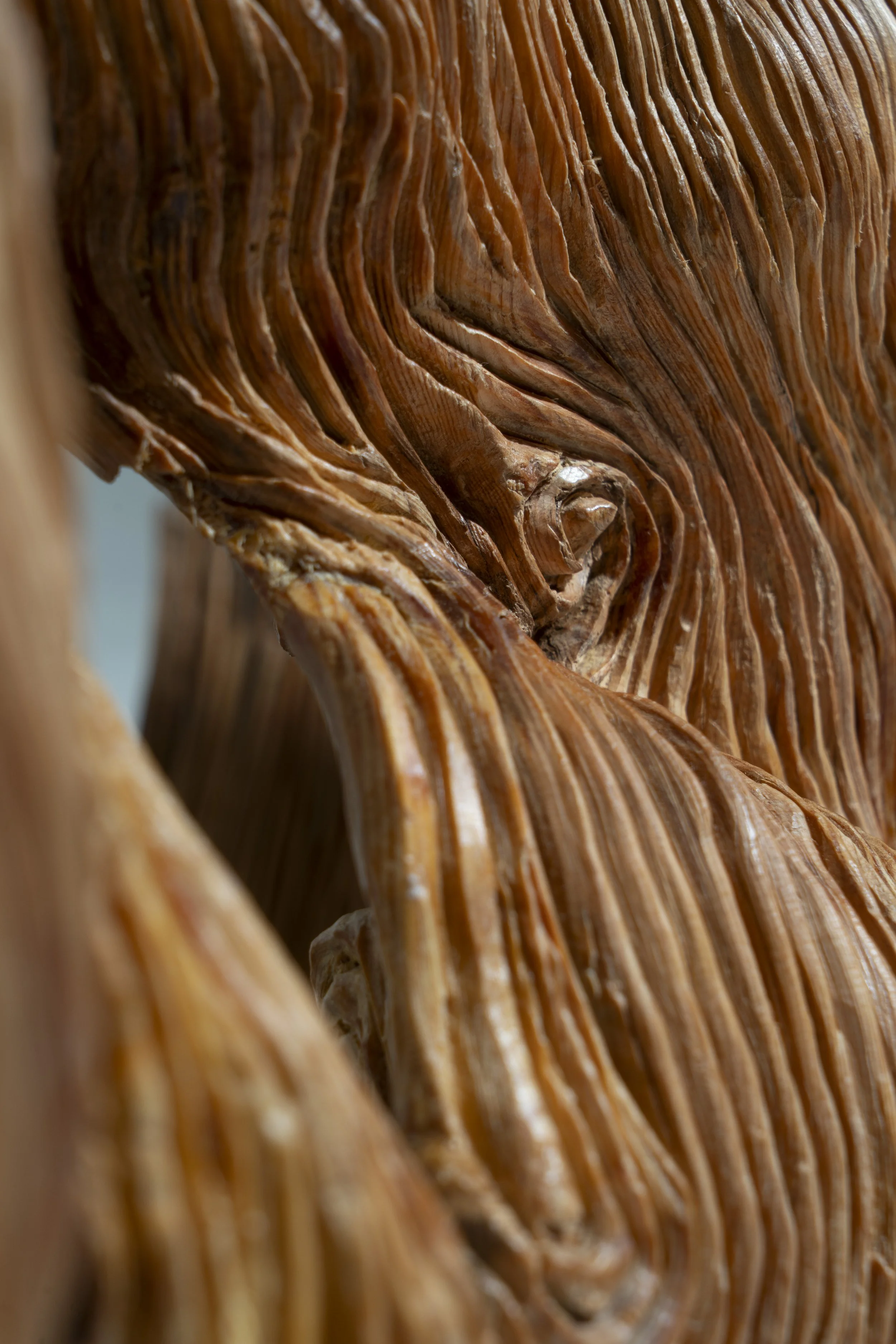
Following the direction of the xylem, secondary layers were selectively removed to reveal its internal structure, without replacing the original morphology with a predetermined form.
The result cannot be replicated or transferred to another fragment. The form of C depends on the material history of this particular wood and on a specific, prolonged and unrepeatable working process.
For information regarding acquisition and sales conditions, please get in touch directly.
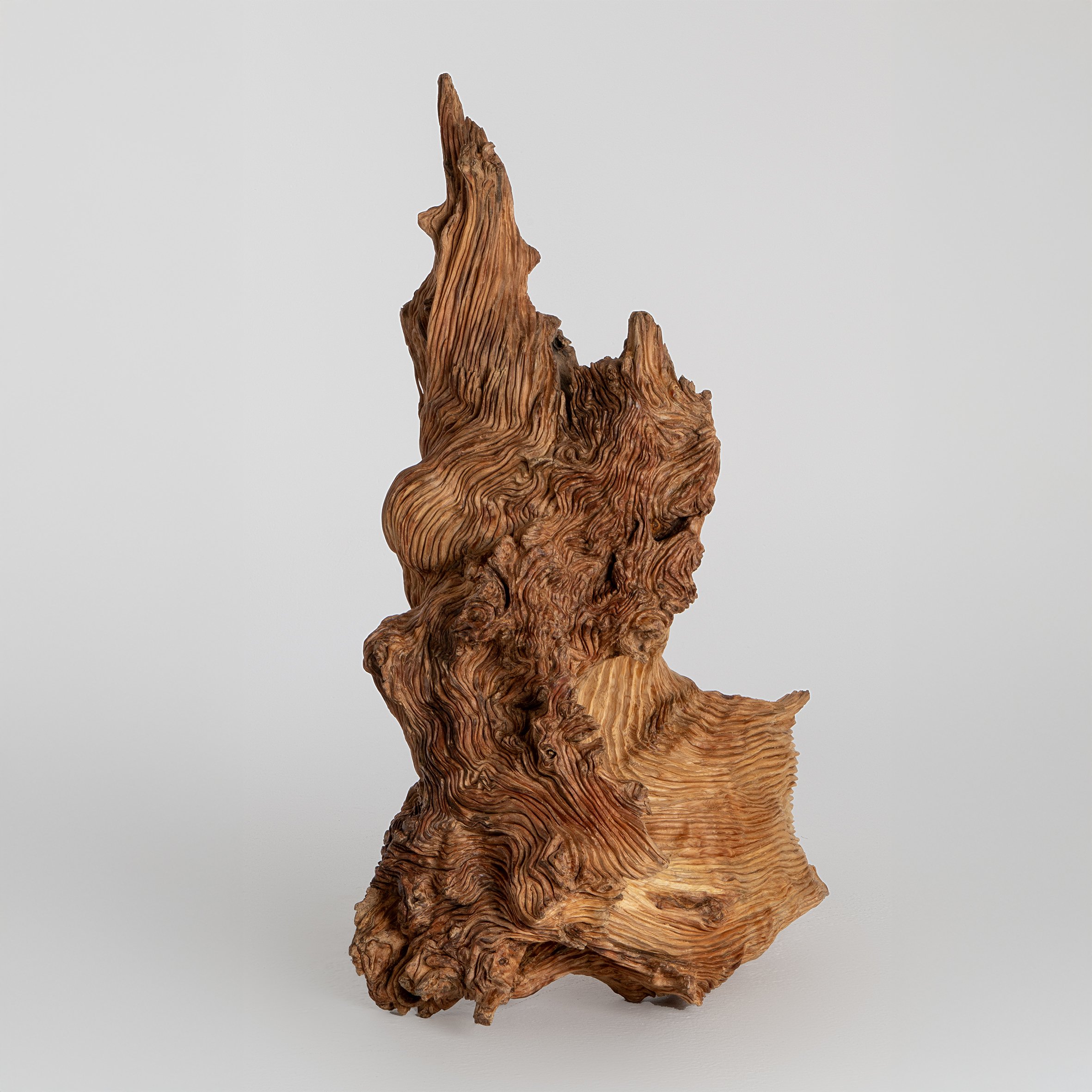
C - 2024, Black pine (rescued high-mountain wood) 85 × 85 × 65 cm · 34 kg. Selective hand carving following the xylem direction, scraping and waxing. Photography: © Monstera Plato
“H”
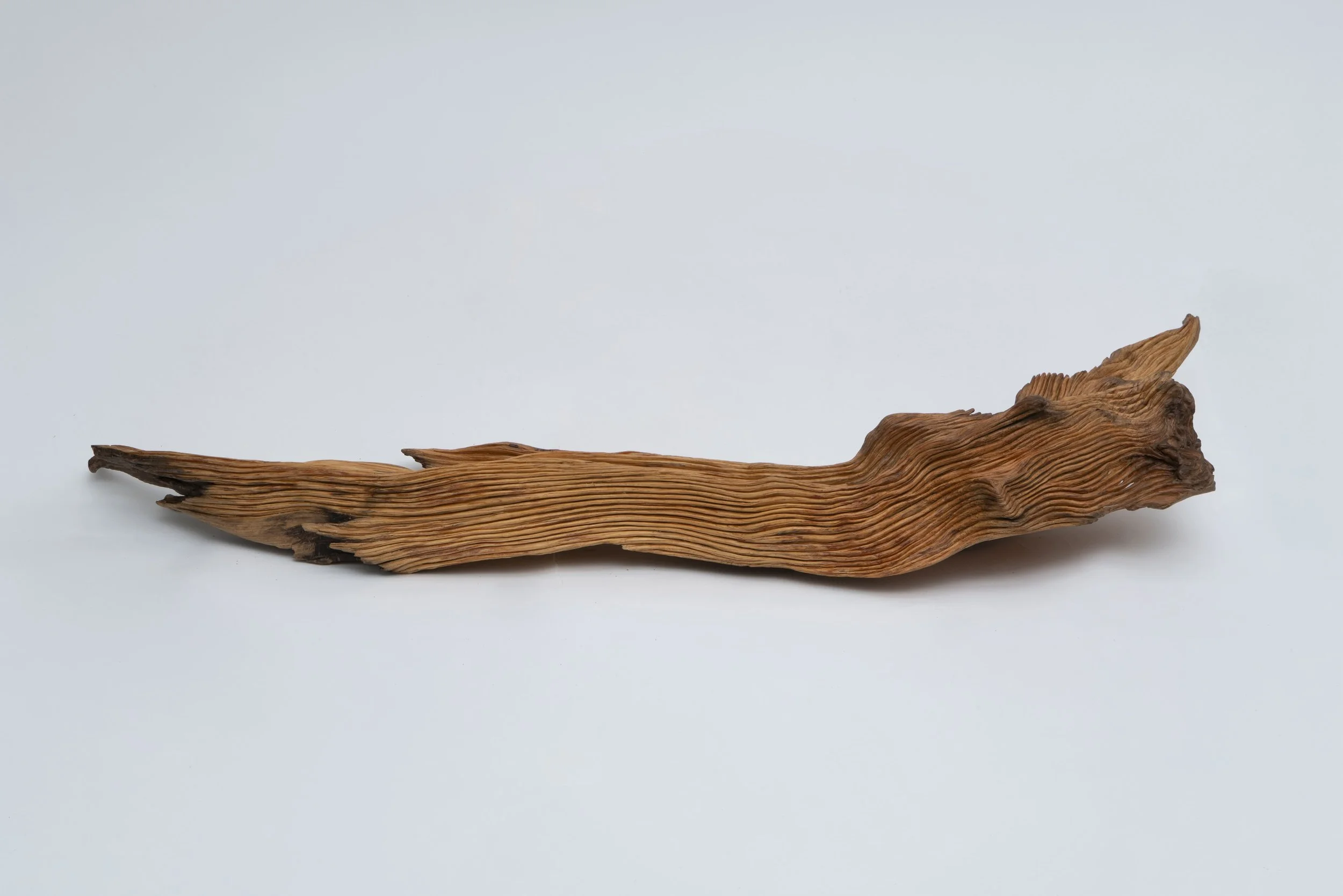
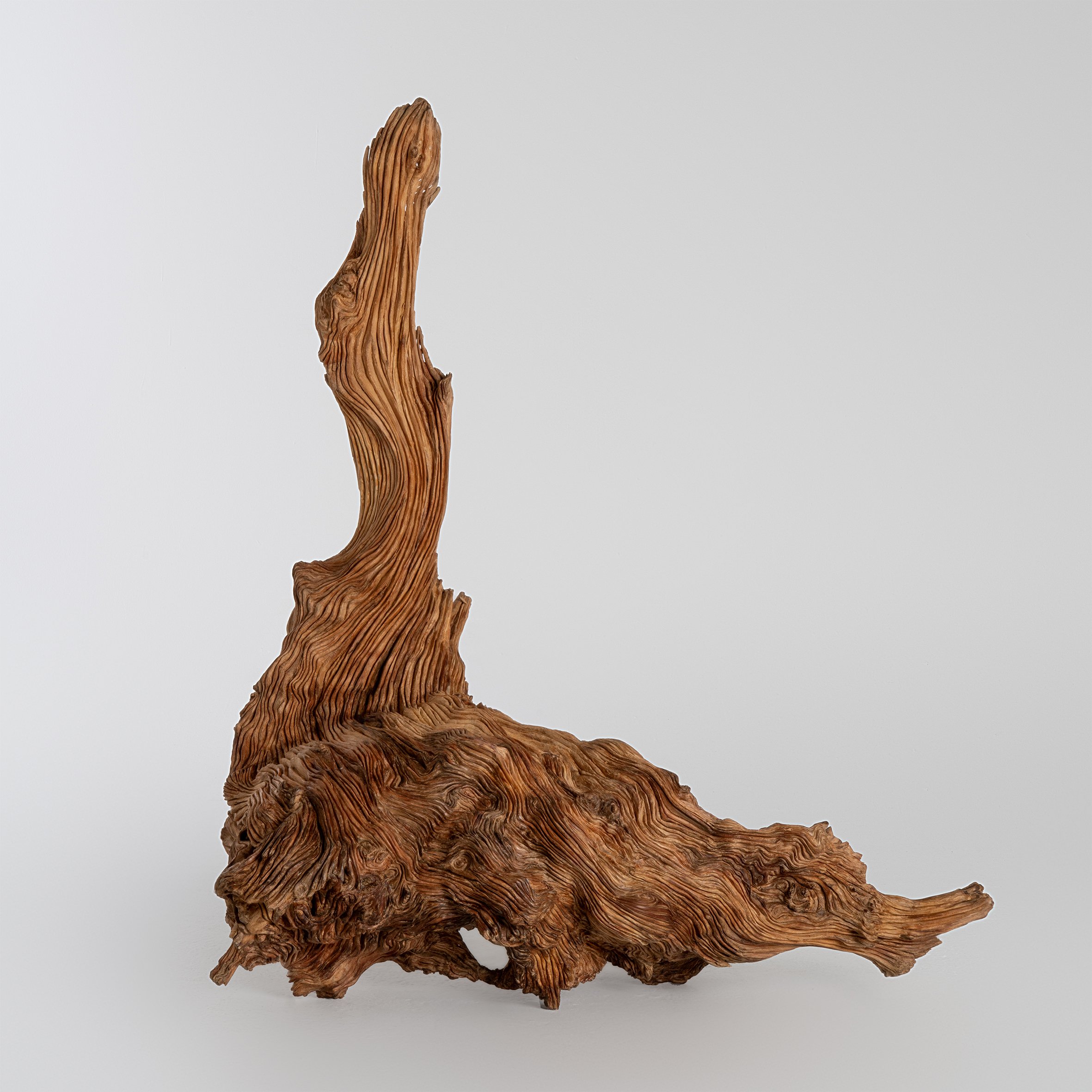
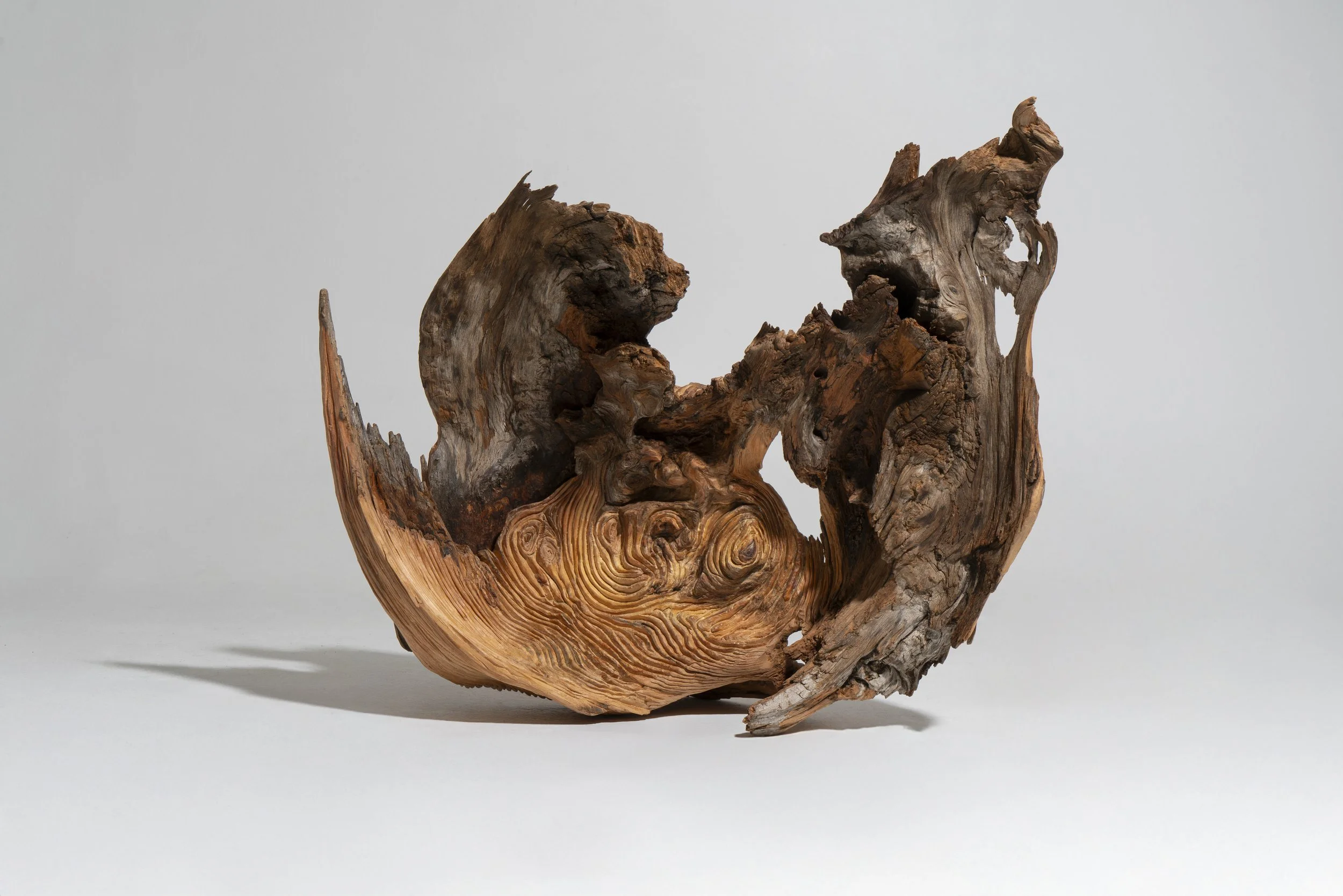
H is the first CHRONOX work in which part of the wood is deliberately left uncarved.
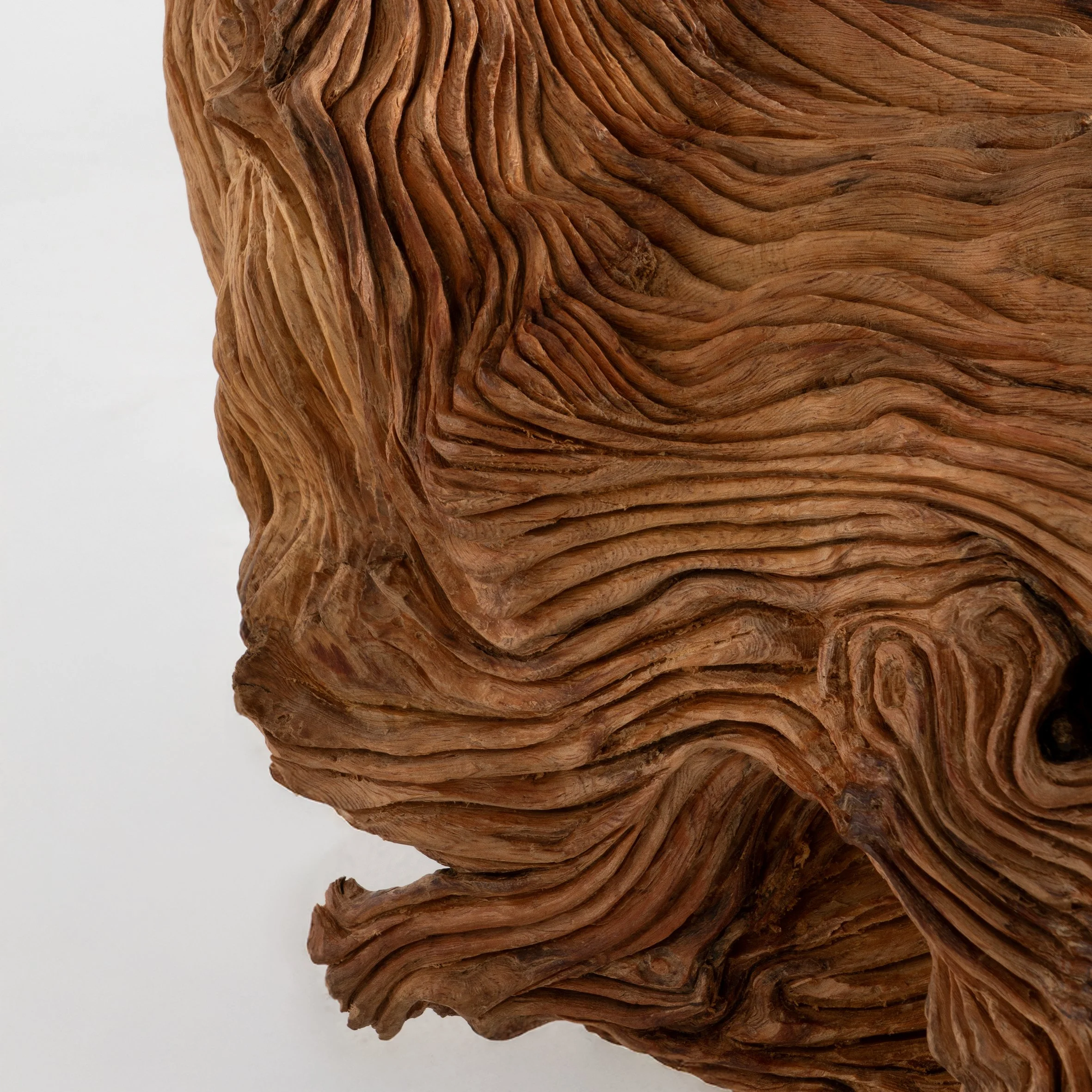
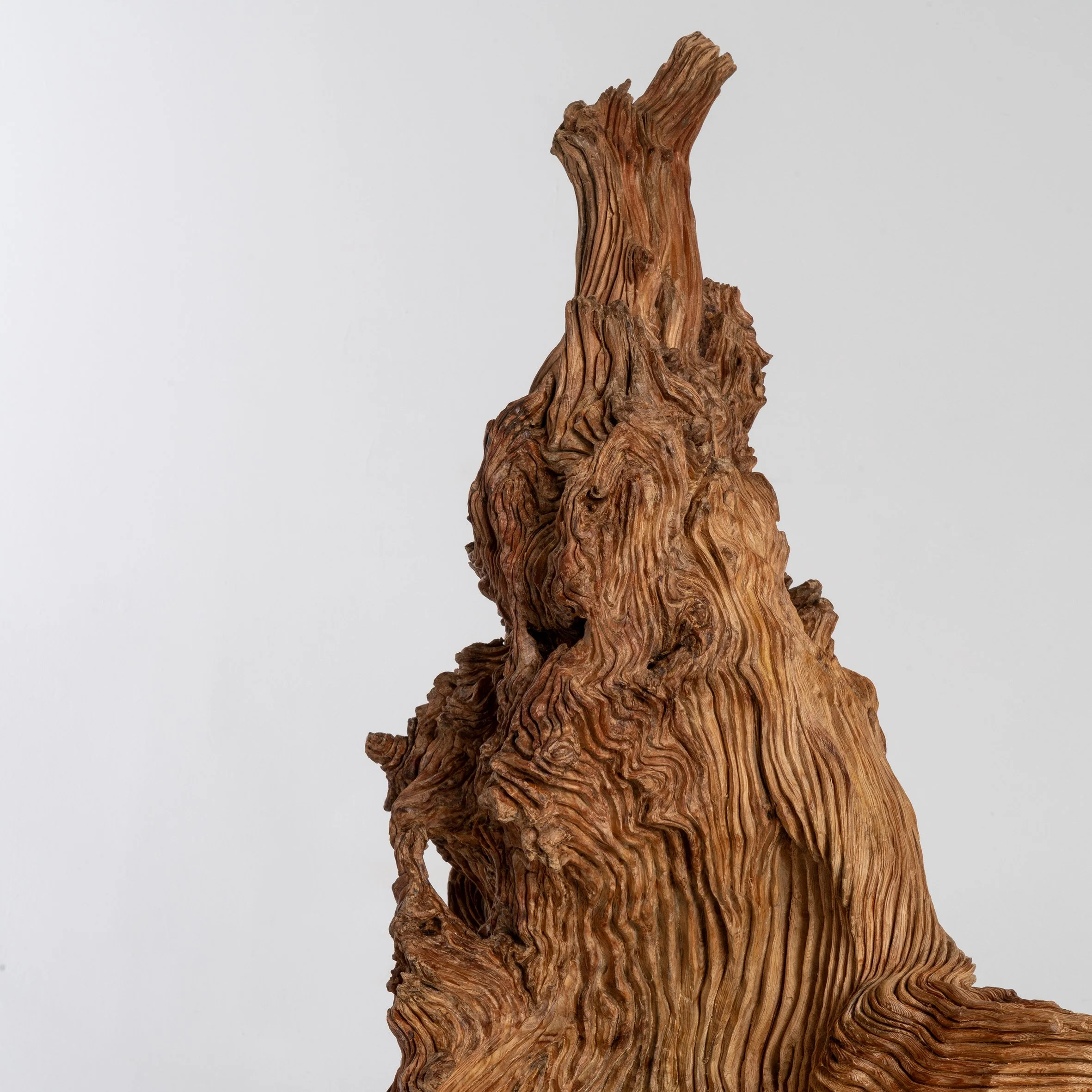
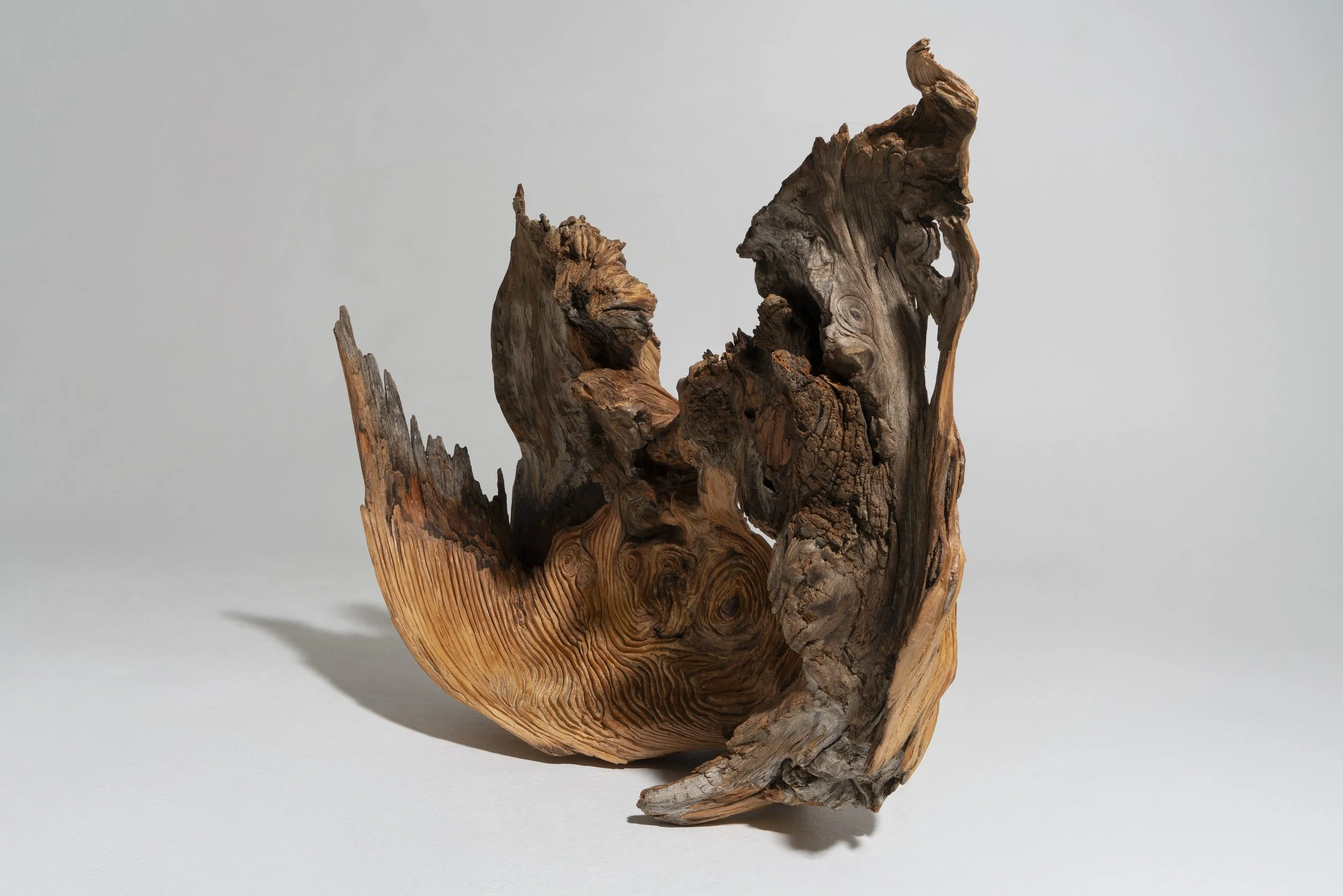
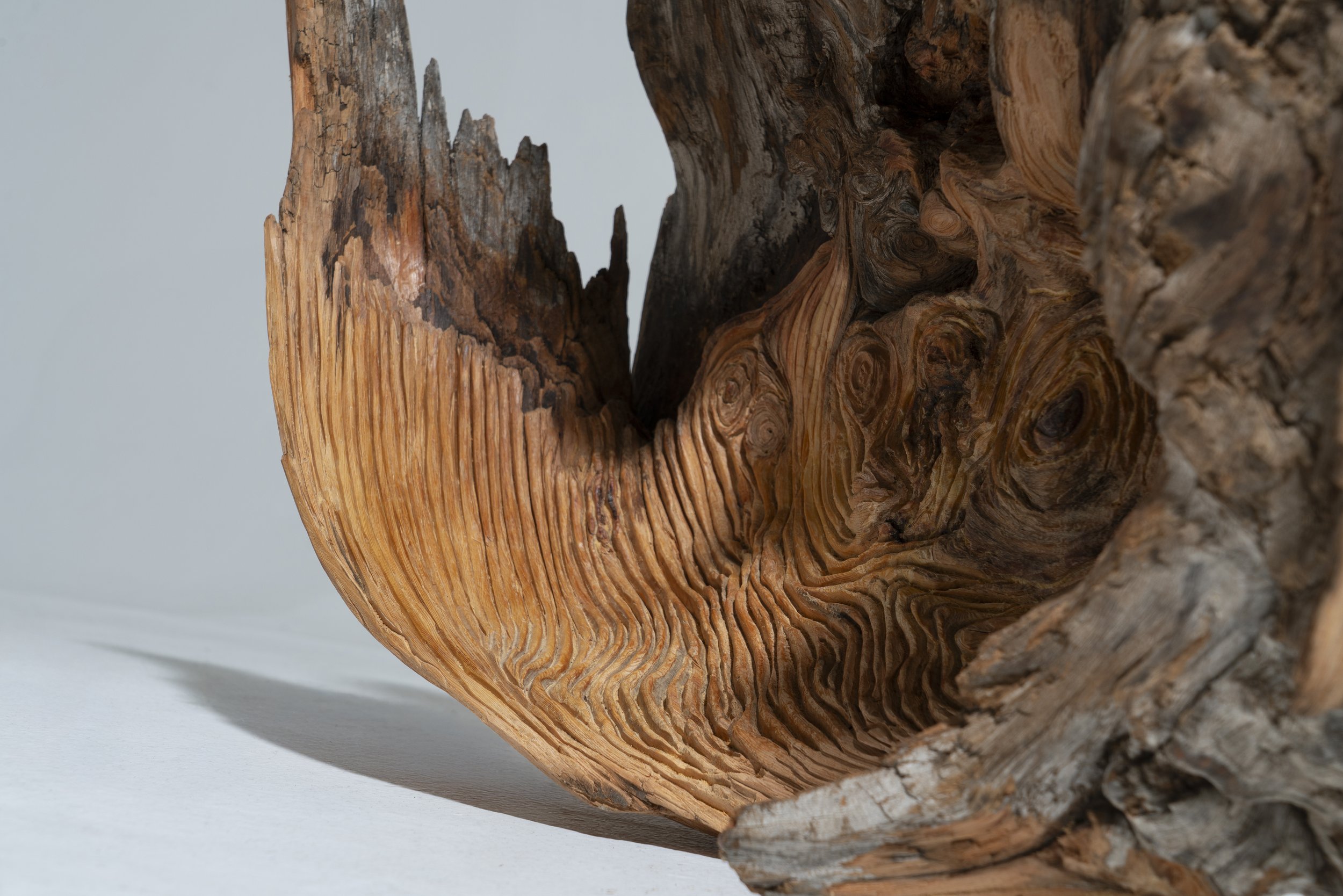
As the second sculpture in the sequence, it introduces a change in the method established with C. The carved areas coexist with surfaces shaped solely by wind, frost, sunlight and rain during the fragment’s prolonged exposure in the mountains.
The hand carving follows the direction of the xylem, revealing part of the internal structure without removing the external traces of erosion. The boundary between these surfaces makes three processes visible: the tree’s growth, environmental action and human intervention.
H establishes that working on a fragment does not require occupying its entire surface. It also means deciding where the work should end.
For information regarding acquisition and sales conditions, please get in touch directly.
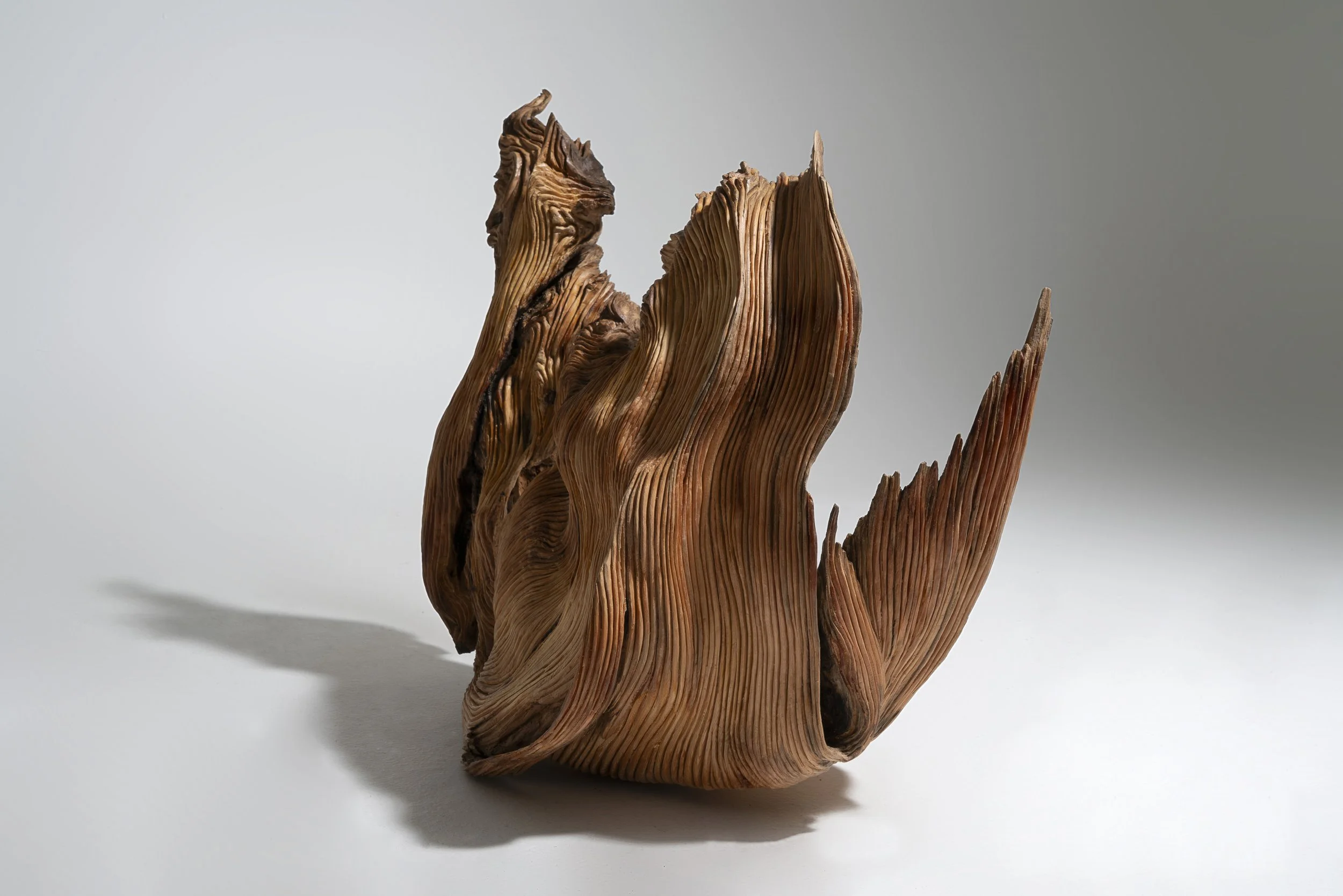
H - 2025, Black pine (rescued high-mountain wood) 45 × 75 × 60 cm · 12 kg Selective hand carving following the xylem direction, scraping and waxing. Photography: © Monstera Plato
“R”
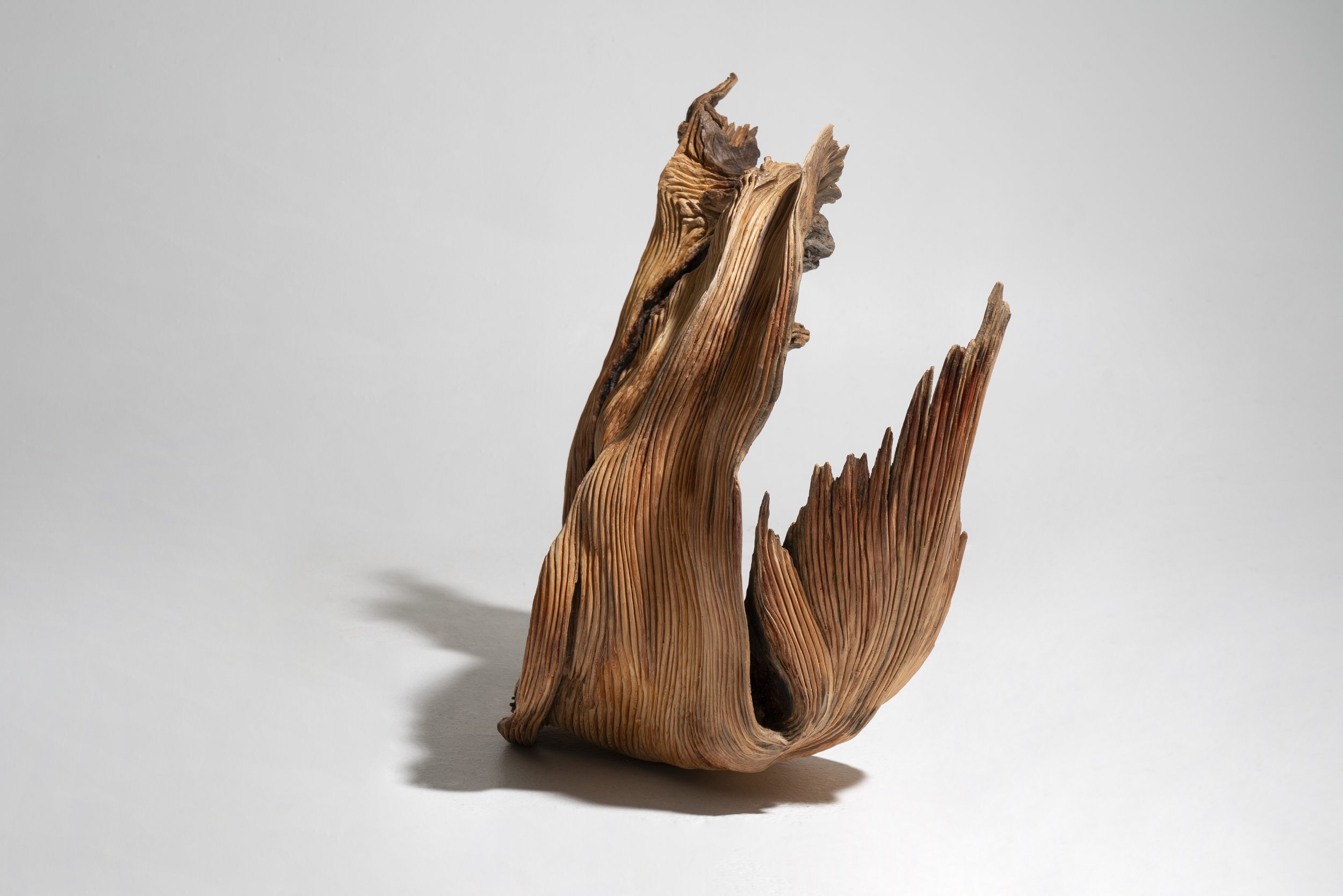
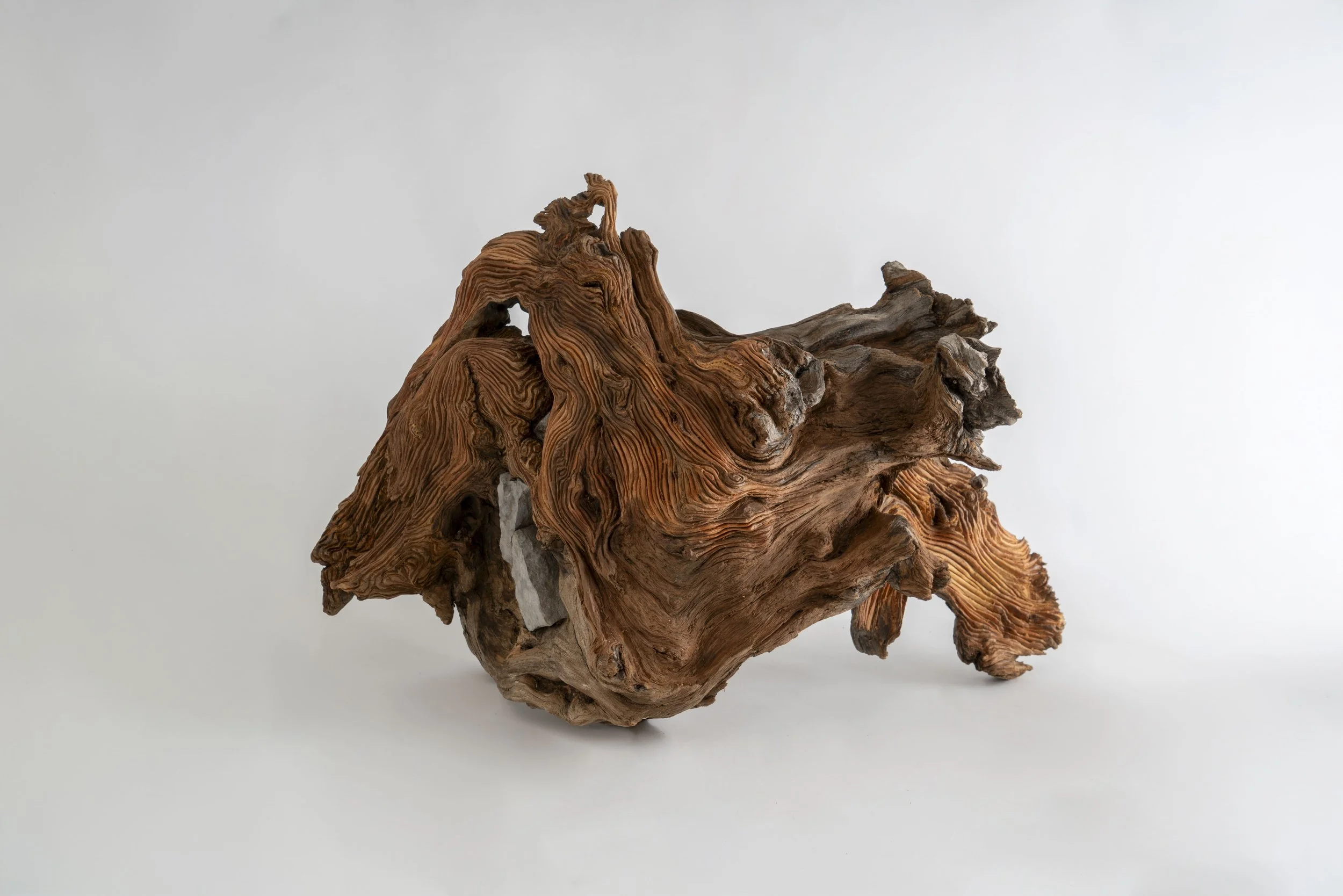
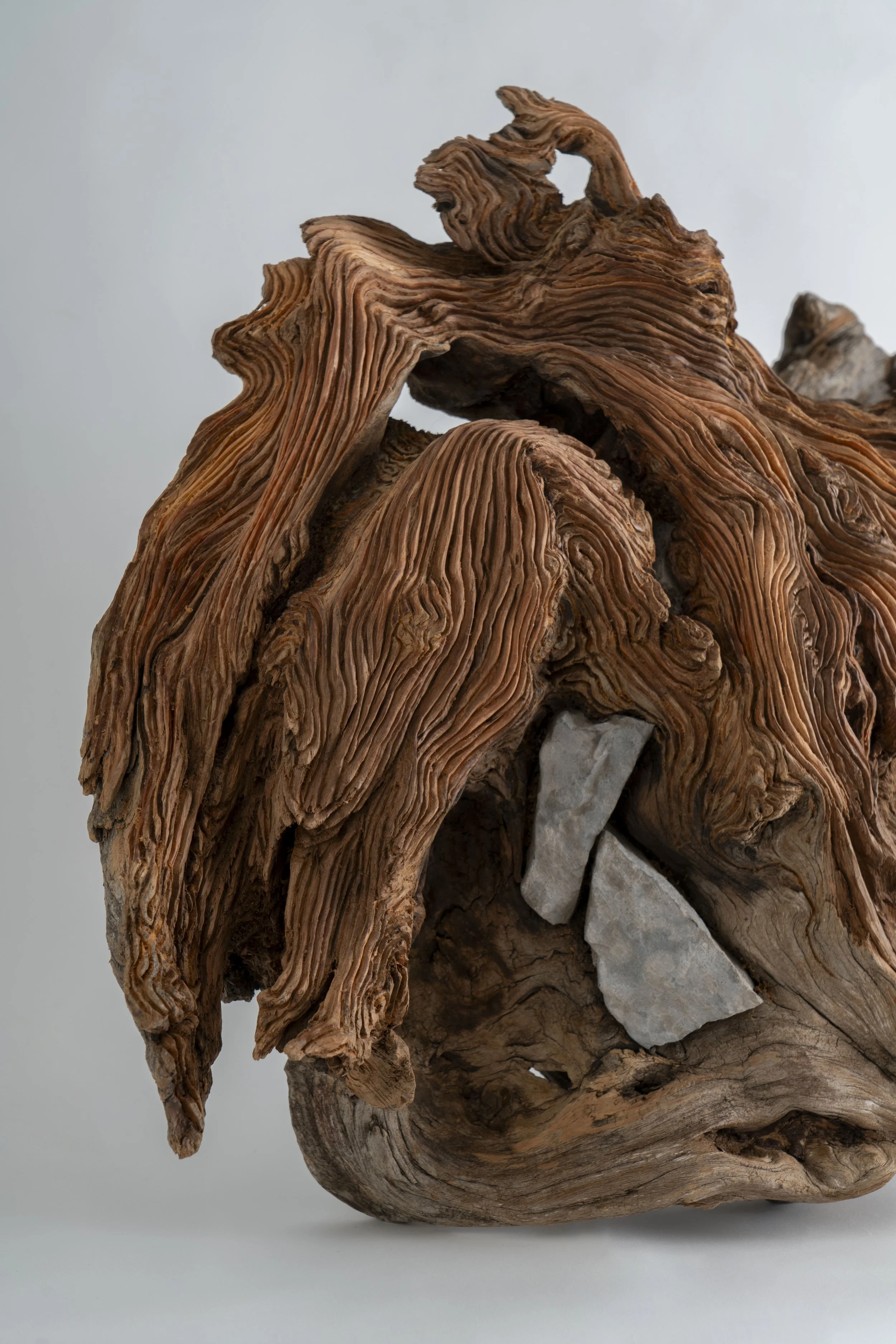
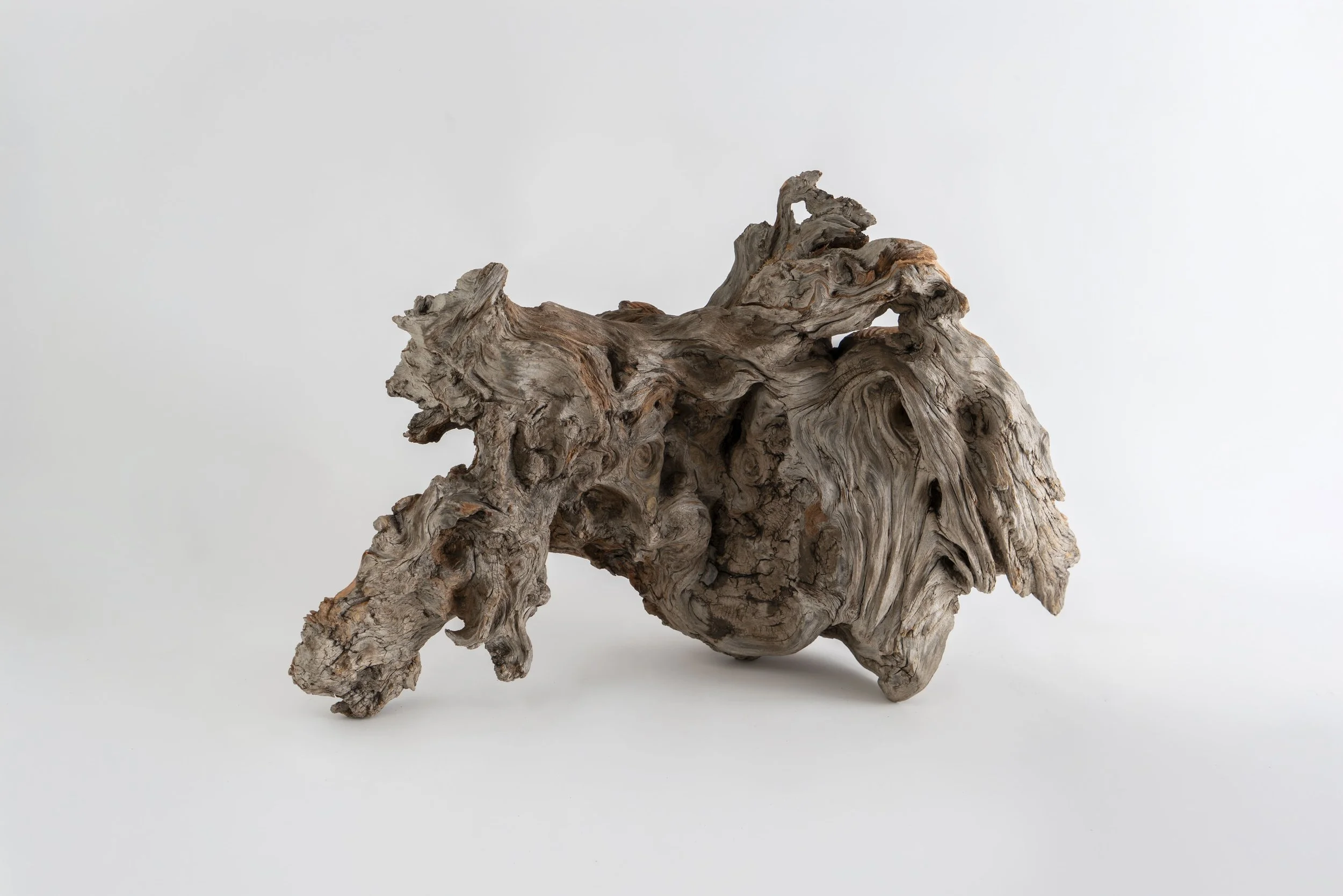
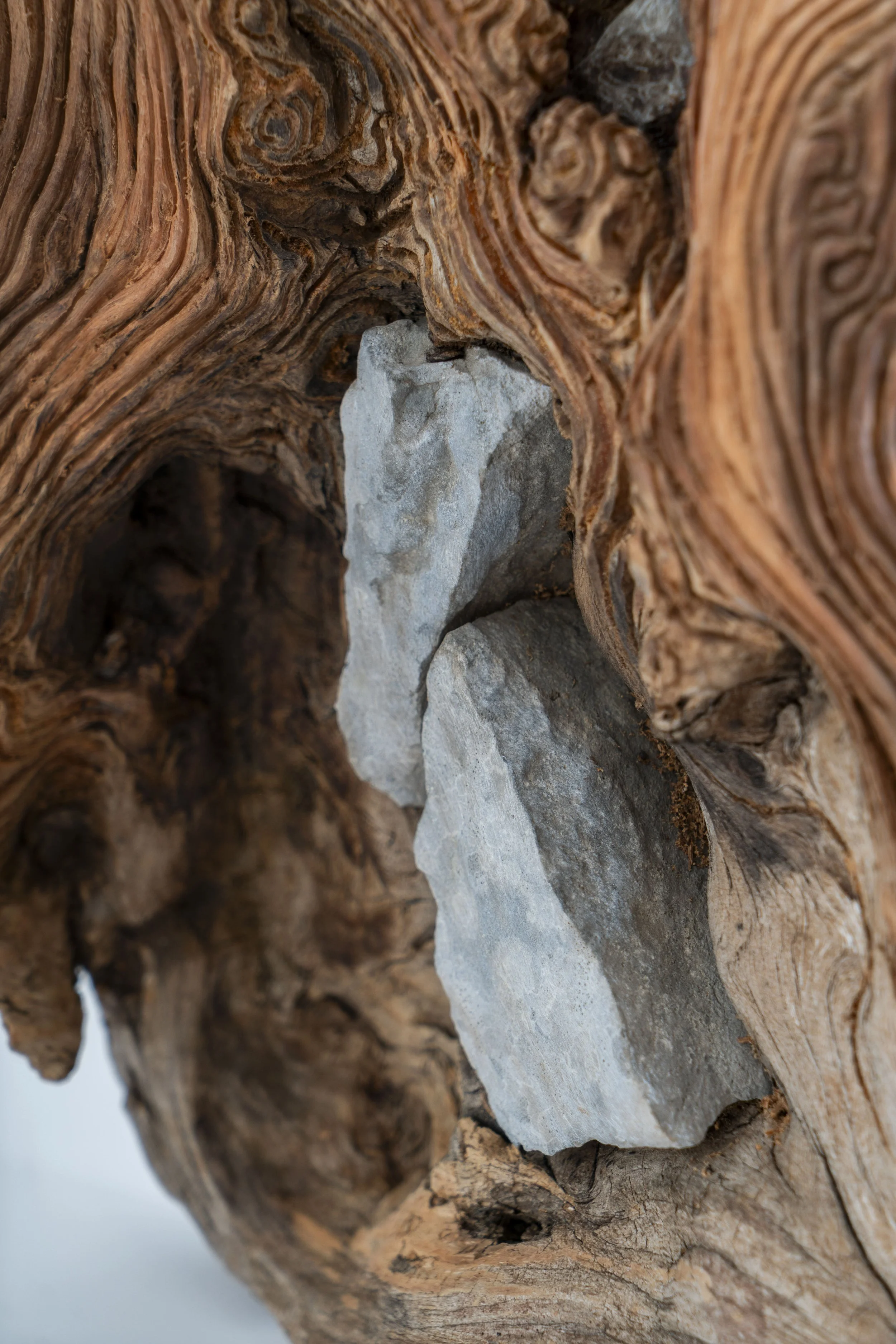
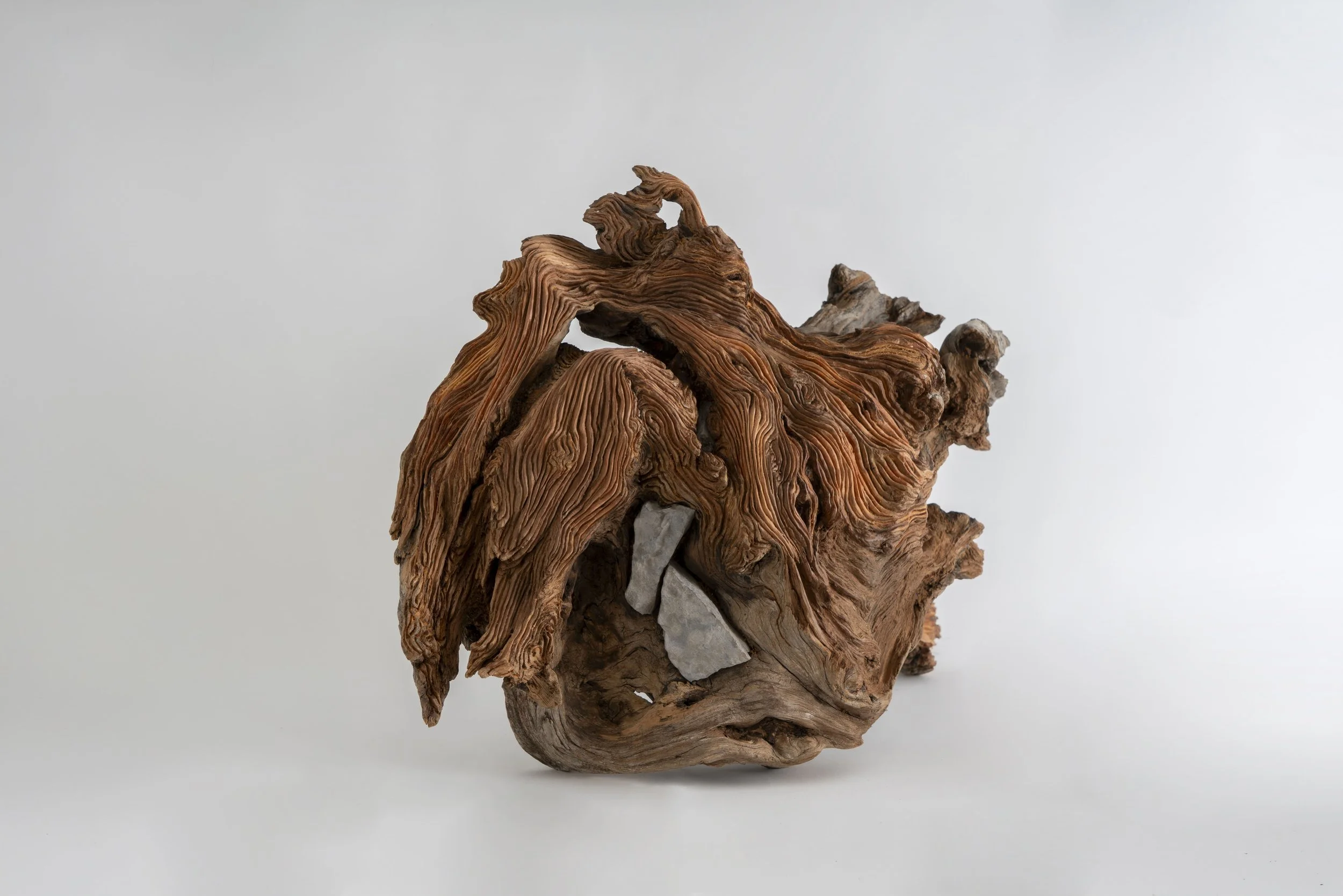
The fragment used for R formed around three stones that remain lodged within its interior.
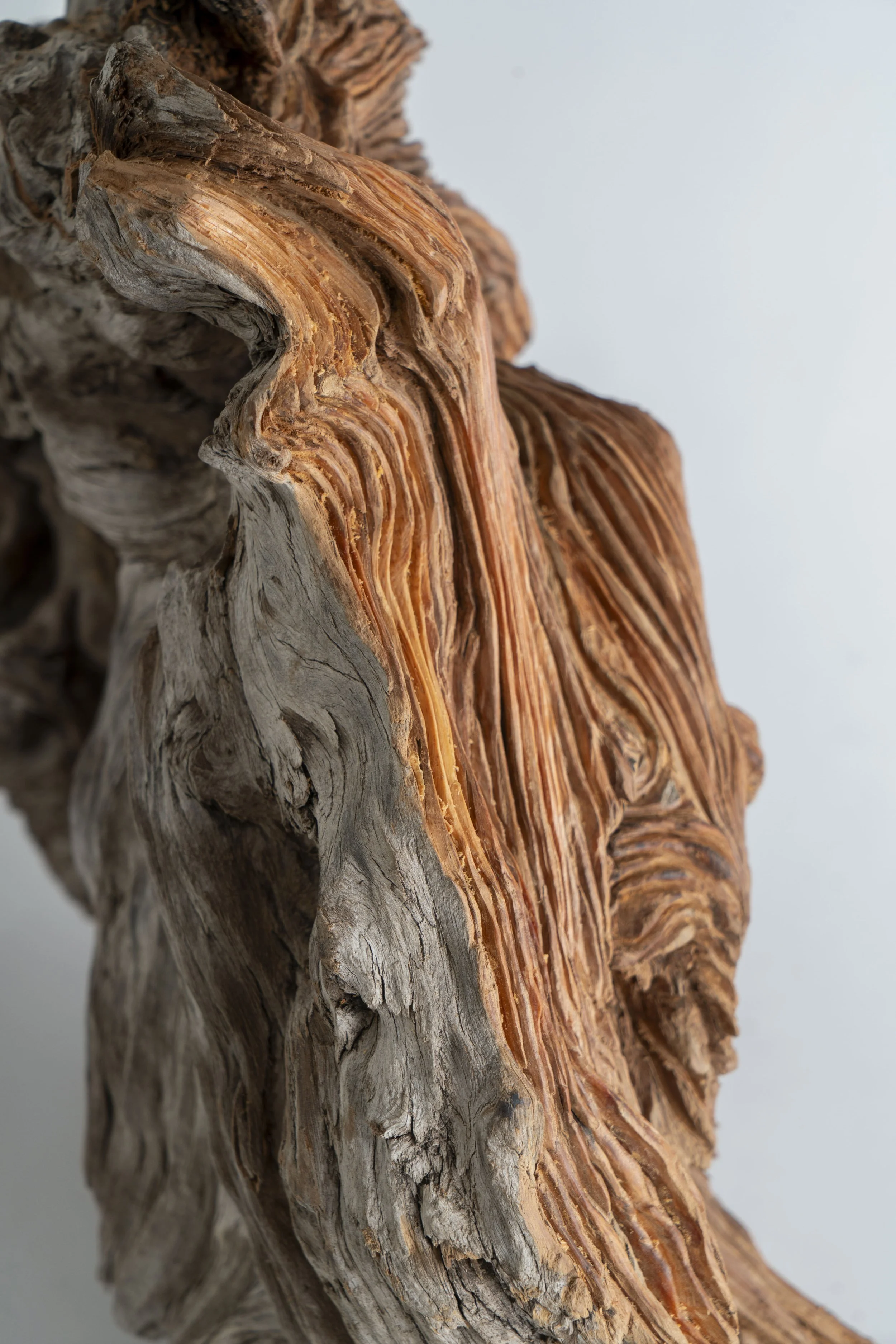
R is the third work in CHRONOX and is currently still in progress. Its open structure reveals the three stones found inside the wood when the fragment was recovered. They were neither added nor removed: they belong to the material conditions under which the tree grew.
The wood developed in response to the contact and pressure exerted by these mineral bodies. The hand intervention progresses along the direction of the xylem, without separating the elements or correcting the deformations formed around them.
Each newly exposed area changes the understanding of its structure, which means that the final extent of the intervention has not yet been determined. The stones do not function as elements added to the sculpture: they provide evidence of how the tree adjusted its growth when it encountered them. R preserves that material response without separating the wood from the conditions that contributed to its form.
For information regarding acquisition and sales conditions, please get in touch directly.
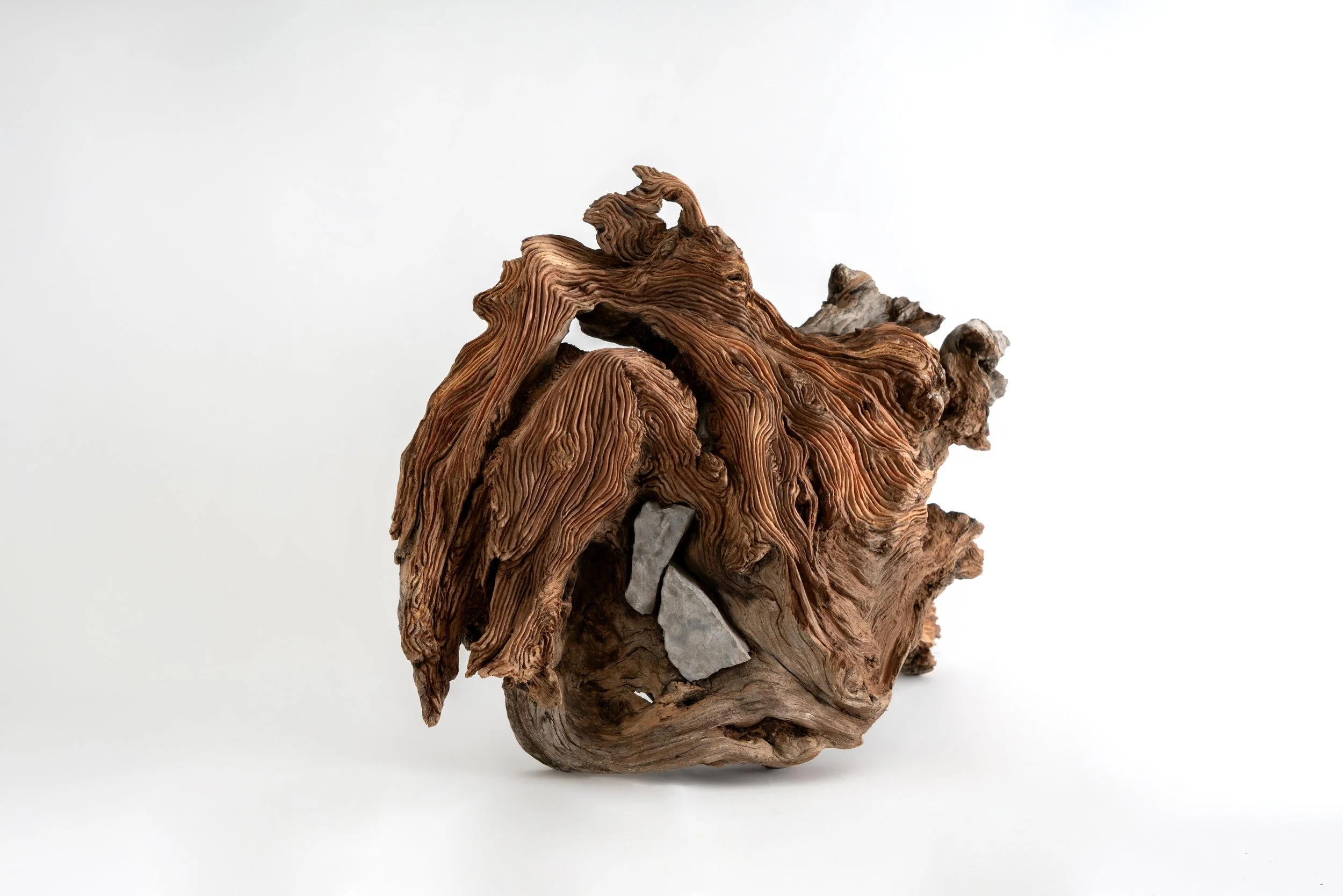
R - “work in progress” Black pine (rescued high-mountain wood), with three stones lodged within its interior. 85 × 55 × 35 cm · 23 kg. Selective hand carving following the xylem direction
Photography: © Monstera Plato
“O”
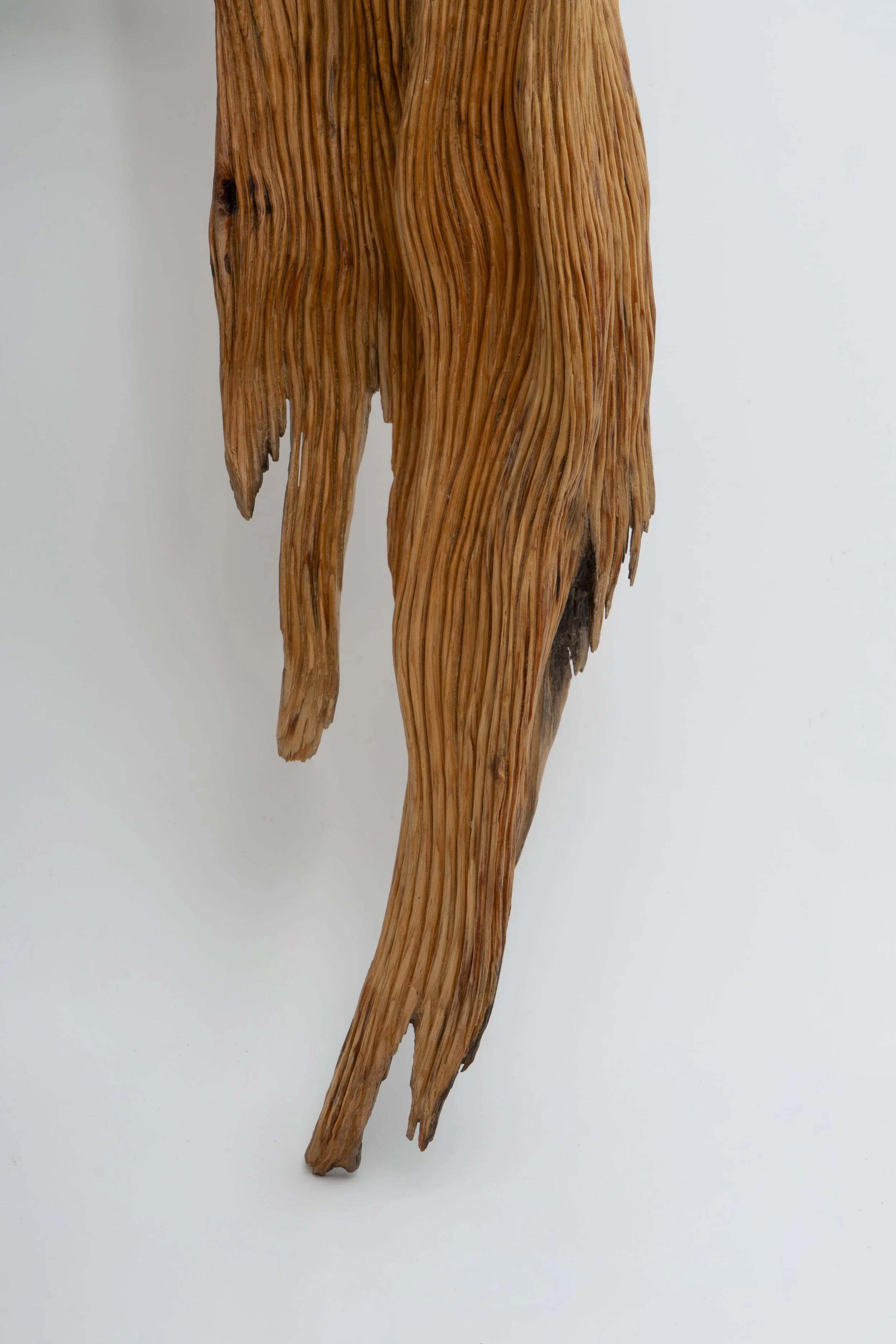
O introduces a new position within CHRONOX: vertical, frontal and raised from the floor.
As the fourth work in CHRONOX, it introduces the wall-mounted format into the project for the first time. The fragment is presented vertically and at a height traditionally associated with painting, while retaining its depth, weight, irregular outline and a surface that cannot be reduced to a flat plane.
The hand intervention follows the direction of the xylem, exposing areas of the internal structure while preserving other surfaces shaped by the tree’s growth and prolonged exposure to the elements. The form was neither cut nor regularised to fit the wall.
Its wall-mounted condition is not merely a display solution. O relocates material recovered from the mountains within a cultural device traditionally designed to present images. The viewer approaches it frontally, but encounters a sculpture that exceeds that way of looking.
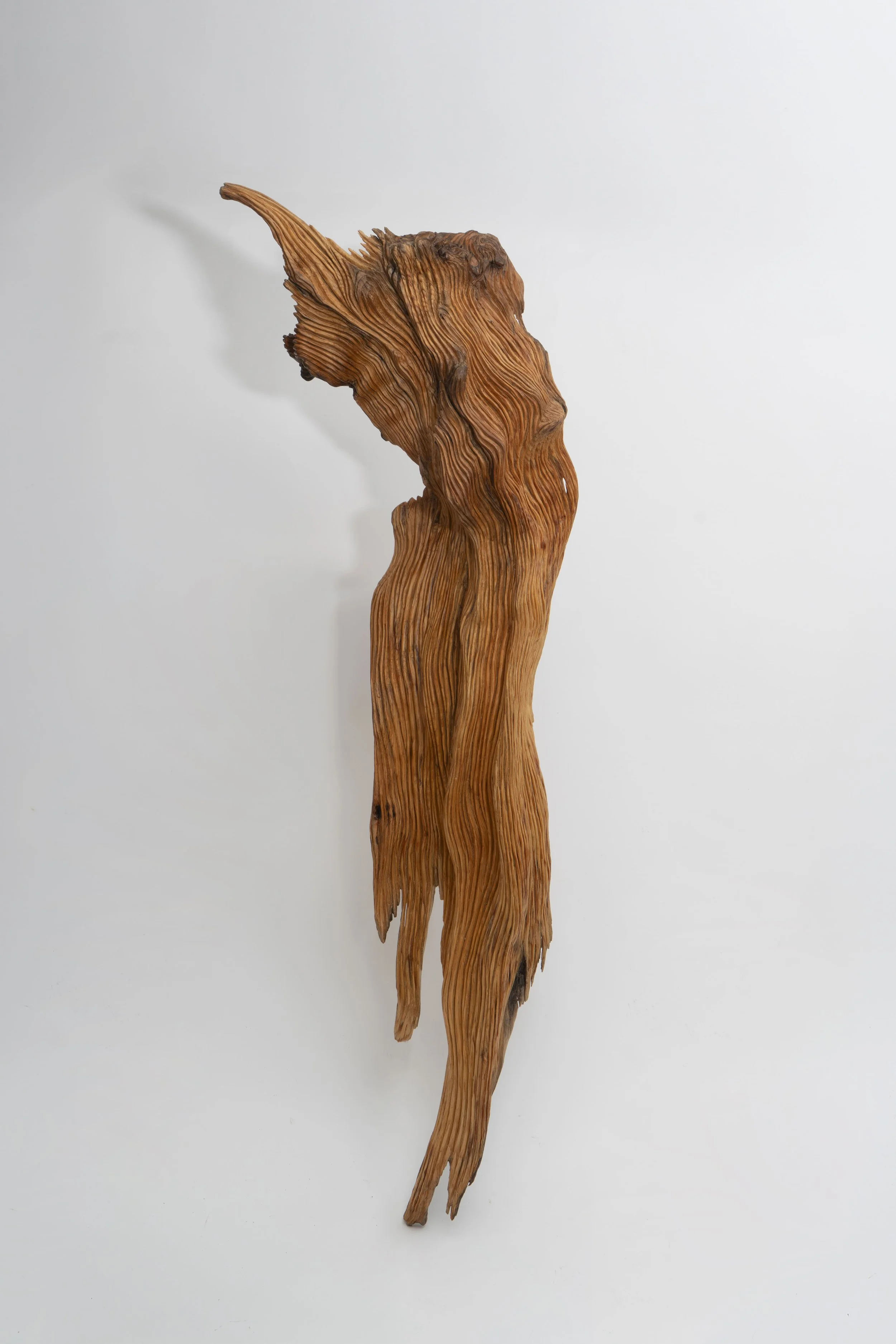
O - 2025, Black pine (rescued high-mountain wood) 107 × 35 × 17 cm · 7 kg. Wall-mounted sculpture. Selective hand carving following the xylem direction, scraping and waxing
Photography: © Monstera Plato